Presidential void affects security: Gemayel

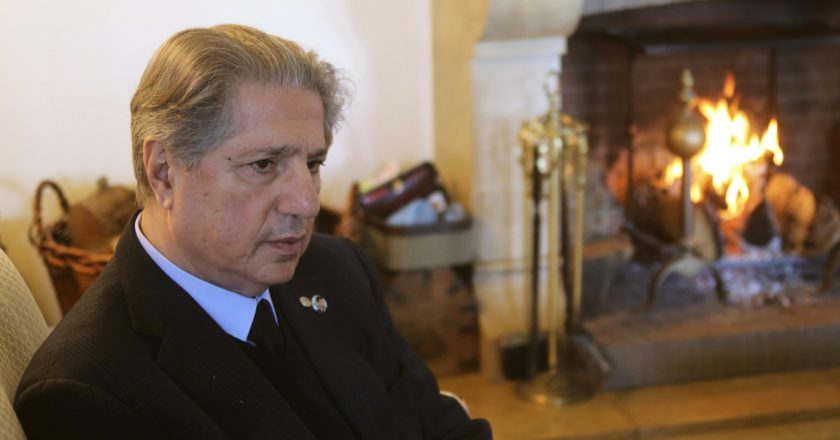
BEIRUT: Kataeb Party leader Amine Gemayel said Wednesday that the presidential void could affect the security situation and the work of the state institutions, adding void should not prevail for long.

“The void in the presidency post could pose a threat to stability in the country,” Gemayel said after meeting a delegation from the Maronite League and the Maronite Council.

“Void in the presidency could also lead to void in the institutions, and we should respect the National Pact,” he said.

The National Pact is an unwritten agreement formed in 1943 that laid the foundation of Lebanon as a multi-confessional state and has governed the political dynamics of the country to this day.

Gemayel also said that the state of presidential void in the country should not linger and reiterated that Parliament could not legislate in light of a presidential void.

“We should not adapt to the current situation and the status of not having a president for the county,” he said.

“The Kataeb is holding on to its stance that Parliament becomes an electoral body and not a legislative one throughout the period of presidential void, as Article 75 of the Constitution stipulates.”

Source: The Daily Star

U.N. urges Lebanon to complete election on time

BEIRUT: U.N. Special Coordinator for Lebanon Derek Plumbly urged lawmakers Thursday to complete the presidential election before the Constitutional deadline, a day after Parliament failed to elect a candidate.

“I should take the opportunity in light of yesterday’s events to stress the priority that we attach to the continuity of state institutions and in that sense to welcome the beginning of the presidential election process yesterday and to underline our concern that it be completed successfully within the timeframe set by law,” Plumbly said.

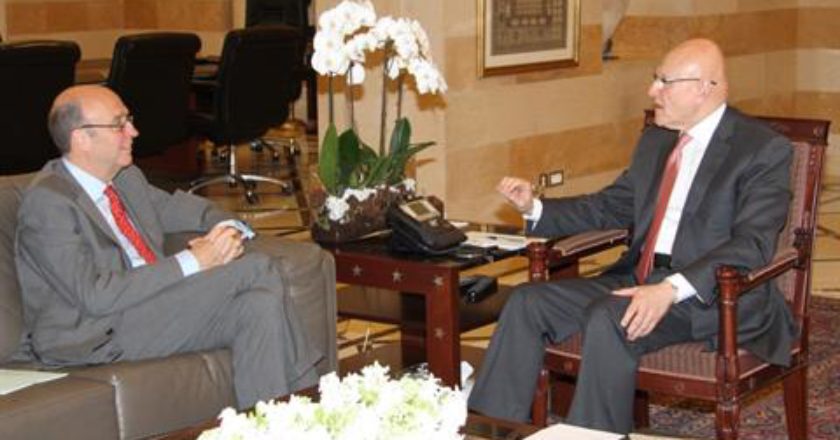
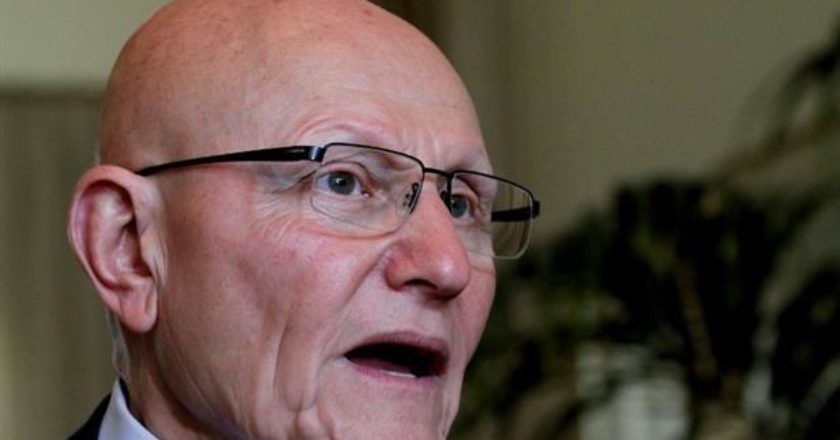
His comments came during a brief chat with reporters at the Grand Serail following a meeting with Prime Minister Tammam Salam.

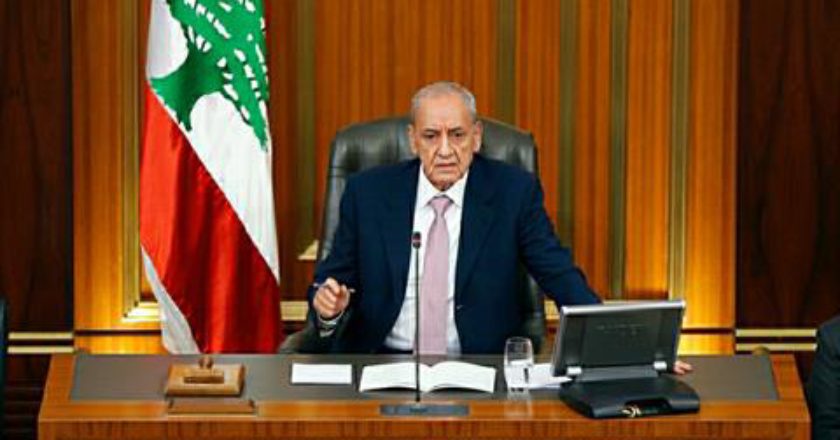
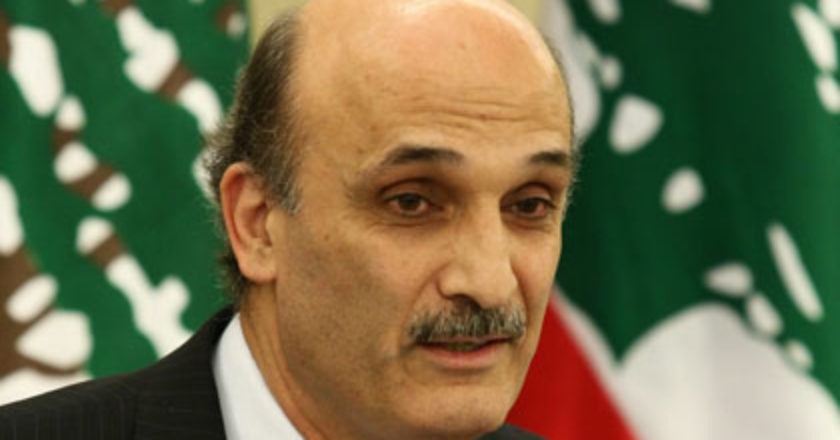
MPs failed Wednesday to elect a new president in the first round of polls in Parliament with presidential hopeful Samir Geagea receiving 48 votes while 52 lawmakers opted to cast a blank ballot.

Speaker Nabih Berri scheduled April 30 for the second round of voting in which a nominee should receive 65 votes to win.

Plumbly also said he discussed with Salam the security plan aimed at restoring law and order in the country, saying he expressed appreciation for the measures.

The U.N. official said he stressed the “international community’s support for Lebanon’s security and the steps this government is taking.”

“Specifically, on the army, we had a meeting in Rome two weeks ago which was a preparatory one designed to reinforce international efforts to assist the Lebanese army,” he said.

The two also spoke about the Syrian refugee crisis in Lebanon, with over one million refugees.

“I emphasized our continued support for the government as it tries to address the very immediate challenges, our understanding of the size of the challenge facing Lebanon and the readiness of the United Nations to stand side by side with Lebanon including, of course, in providing assistance to host communities,” he said.

Source: The Daily Star

Lebanese watch polls but remain apathetic

BEIRUT: From grocers to dressmakers, Lebanese from Christian and Muslim neighborhoods alike were avidly following the televised parliamentary session to elect a new president Wednesday, but said results would not impact their lives directly.

Most were cynical about the effectiveness of the candidates vying for the country’s top Christian post, remaining apathetic over the results, no matter who the victor might be.

Some, like dressmaker Habib Said from Beirut’s Hamra, had predicted the results before they were announced: “No one will get the majority, there will be another session,” he told The Daily Star minutes before Parliament Speaker Nabih Berri announced the news.

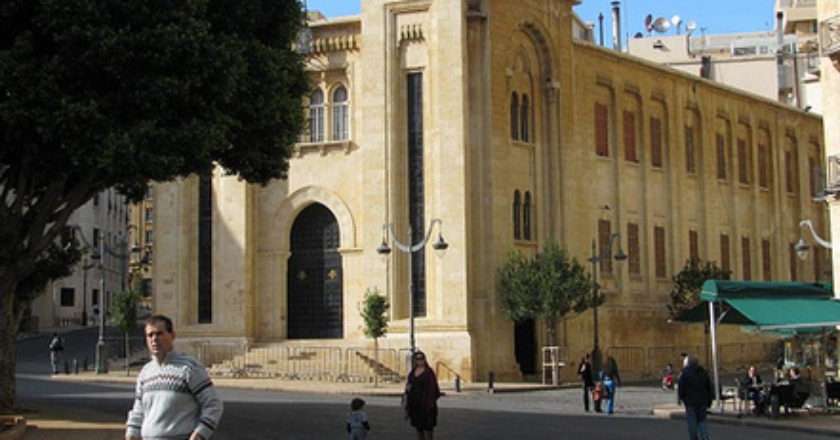
The Parliament session failed to elect a new head of state, as rival factions remained divided over the country’s next president. None of the proposed candidates secured the two-thirds majority needed to win in the first round of voting.

The session was adjourned for lack of quorum after many March 8 coalition lawmakers walked out, with a new session set for April 30.

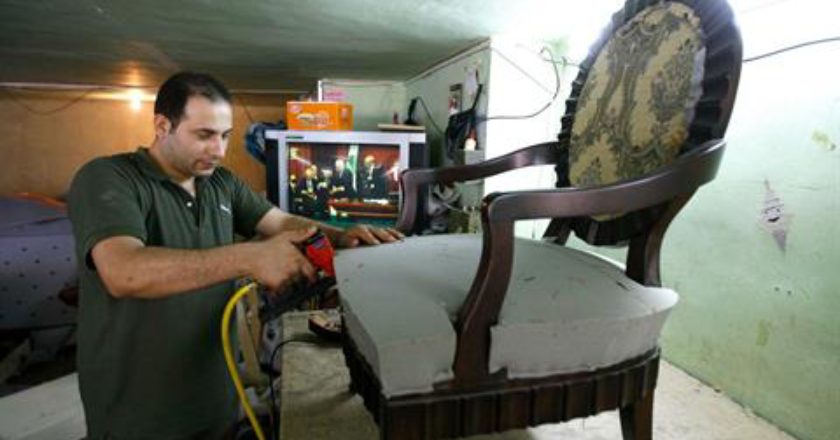
The disappointing conclusion had little effect on Lebanese watching the developments on TV.

“They [politicians] all mock the people,” said Josephine Sahyoun, who works in a baby clothes store in the Metn town of Bsalim.

For Sahyoun, none of the proposed candidates were worthy of the presidential post.

She trivialized the polls. She said she wouldn’t be surprised in the event of a presidential vacuum, as “this is Lebanon after all.”

Sahyoun’s feelings were echoed by many Christians in the area; several had told The Daily Star they were simply not interested in monitoring the election. Television screens in a number of shops were tuned in to serial dramas, not the live broadcast of the parliamentary session.

In a Broummana bookstore, elderly employee Nawader laughed off the election entirely. “We are not even watching the news,” she said, gesturing toward the soap opera playing out on TV. Her two friends nodded in agreement nearby.

“Whatever needs to happen, let it happen, we don’t care at all,” Nawader added. She complained that politicians do more harm than good, claiming that they were responsible for driving her children to leave the country to find work abroad.

“We are fed up,” she said.

Dismissive reactions were rampant on social media, with many offering their criticisms about the election using the hashtag #lebanonpresident2014.

“Lebanese presidential elections session: Comedy in the making. #lebanonpresident2014,” read one such tweet.

“I am uncomfortable with voting for a murderer. But this is Lebanese politics. Choice is real limited. #lebanonpresident2014,” another tweet said, referring to March 14 candidate and head of the Lebanese Forces Samir Geagea.

Some ballots submitted included the names of figures killed during the Civil War. Their relatives still accuse the LF leader for being responsible for their murders.

Other tweets also referred disparagingly to the 52 blank ballots that were cast in the session.

“And the blank ballot is winning #LebanonPresident2014. Why not, let’s just keep it that way,” said one particular tweet.

In Hamra, seemingly every television set was tuned into the news, with fruit vendors, barbers and coffee shop patrons alike watching the parliamentary session closely.

Posters of late former President Fouad Chehab – known for his reformist platform – were seen across the neighborhood, with the slogan “ Fouad Chehab for president” spelled out in bold underneath.

“We are hearing it, but we aren’t watching,” said the dressmaker Said, as Berri appeared on television announcing presidential candidates.

Were he to pick a candidate it would be Geagea.

“For sure,” he said. “Because he’s Lebanese,” hailing the LF leader’s critical stances on Hezbollah.

“I want to know who the candidates will be,” convenience store owner Joseph Karam said. When asked whether the results bore personal significance, he responded with a cool “No, it’s just fun to watch.”

“It’s interesting because there’s no clear favorite,” he said.

“It’s the first time there are many potential candidates.”

The elderly key-maker Atef and his associate Bilal were glued to the television set as election figures were announced. When the speaker announced Geagea was in the lead with 48 votes, Atef grunted. “Not enough,” he said.

Both men guffawed when Kataeb leader Amine Gemayel’s single vote was broadcast.

“We are following it,” said Atef, “But, I don’t really care who wins. None of them are working for the people’s interests.”

Geagea’s candidacy was greeted with more hostility in Shiite neighborhoods – which tend to support Free Patriotic Movement leader Michel Aoun – as his past conviction for the murder of former Prime Minister Rashid Karami and other activities during the Civil War period, as well as his harsh stances toward Hezbollah, have rubbed some the wrong way.

“He is a murderer,” said Kamal, the owner of a convenience store in Khandaq al-Ghamiq, where many residents support the Amal Movement. “Aoun, that’s it,” he said, when asked who he would back.

His sentiments were echoed by many, who perceive Aoun to be on their side, given his party’s association with the March 8 group.

“Geagea, he works with the Israelis,” butcher Fouad Aoun declared with a brush of the hand, also from Khandaq al-Ghamiq. “Everyone here likes Aoun, because he’s close to Hezbollah.”

But at an appliance store nearby, Mazen Hajjar of Zoqaq al-Blat said it didn’t matter who took the top Christian post. “All the candidates are criminals,” he said dismissively.

Despite the general pessimism, some remained hopeful.

For 26-year-old Giselle Garamani, who hails from the Baabda town of Qornayel, though Wednesday’s outcome was to be expected, she still considered the election an “important” event.

Garamani believes a presidential vacuum would be guaranteed, unless Maronite Patriarch Beshara Rai directly intervenes and calls for a centrist candidate. “Otherwise, we will have no leader,” she said.

In Jounieh’s souks, Elia Ghosn was closely watching television in his beauty parlor as the clock hit noon and MPs began to cast their votes.

“My television is on and I am following up,” Ghosn, who hails from the Bekaa Valley, said proudly.

But like many, he feared a vacuum if the candidates selected were not “made in Lebanon,” which he said was a likely scenario.

Not far down, Alaa Sakr, the owner of a hardware store, told The Daily Star he too has been following up on the elections, even though his store lacked a television set.

He was concerned that a presidential vacuum would be bad for business. “We need a strong president,” Sakr said, naming former Interior Minister Ziyad Baroud as the ideal candidate.

Rashid Barbar, the owner of a lingerie store in Zalka, was more preoccupied with business than the election. After Parliament’s failure to elect a president became clear, the flat screen in Barbar’s store was still tuned into the news. “I watch when I don’t have clients,” he said.

Source: The Daily Star

Berri to call for second round of presidental election in May

Speaker Nabih Berri is expected to call for a second parliamentary session set to elect a new president in May as observers are decisive that the first round on Wednesday will not lead to the election of a new head of state.

According to al-Joumhouria newspaper published on Wednesday, the speaker will call for another round unless consensus among parliamentary blocs was reached over the name of the new president.

Lawmakers told the newspaper that Berri’s call on the head of diplomatic missions in Lebanon and former Presidents to attend a legislative session then it would be an indication that consensus has been reached.

MPs said that the speaker informed all parliamentary blocs that he is ready to call for a parliamentary session on Friday afternoon and during the weekend if he sensed that there is possibility for agreement.

Wednesday’s first round of parliamentary deliberations to vote for a new president is expected to fail to elect a new president amid disputes over the name of the new head of state, which threatens a vacuum at the helm of the country’s most important Christian post.

Parliamentary blocs will vote for two candidates on Wednesday – a March 14 official, Lebanese Forces chief Samir Geagea and the Democratic Gathering parliamentary bloc member, MP Henri Helou.

Source: Naharnet

Salam meets al-Rahi, sees no reason for presidential elections to be postponed

Prime Minister Tammam Salam expressed on Thursday his optimism that the presidential elections will be held on time and according to democratic practices.

He said: “We believe that the polls can be held given that Lebanon has been respecting its democracy as demonstrated through the formation of the government and the various parliamentary sessions that have been held lately.”

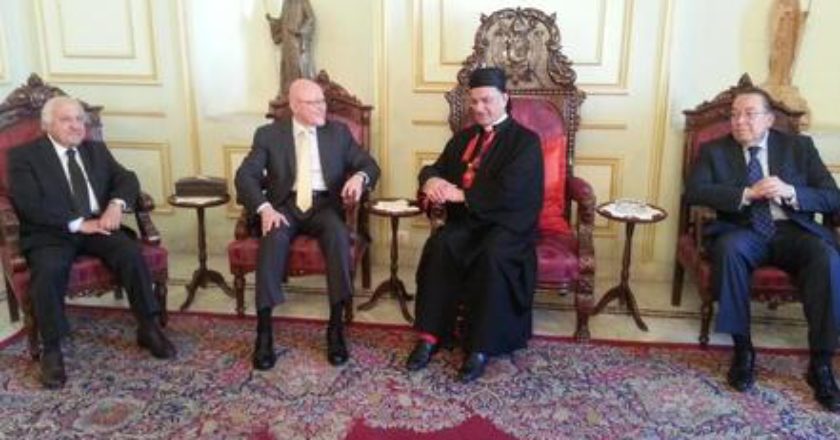
He made his remarks after holding talks at Bkirki with Maronite Patriarch Beshara al-Rahi on the occasion of the Easter holidays.

“There is no reason for the polls to be postponed seeing as democracy is being applied,” stressed Salam.

“We have no reason to be doubtful of the elections,” he continued.

The premier stated that he is keen on respecting the wishes of al-Rahi in holding the elections on time, saying: “It is our duty to comply with national demands, especially if they are made by Bkirki.”

President Michel Suleiman’s six-year term ends in May.

The constitutional deadline to elect a president began on March 25 and ends of May 25.

Earlier this week, Speaker Nabih Berri called for a parliament session for April 23 to elect a president.

So far, Lebanese Forces leader Samir Geagea is the only candidate to submit his candidacy.

Source: Naharnet

Berri to call session to elect president by early May

BEIRUT: Speaker Nabih Berri is expected to convene a Parliament meeting to elect a new president by end of this month or early May, a March 8 source said Sunday, implicitly rejecting the patriarch’s call for an early session this week.

“Speaker Berri will call Parliament into the first session to elect a new president by the end of April or early May,” the source told The Daily Star.

The source said a Parliament meeting, scheduled for Tuesday to debate and vote on the public sector’s controversial salary scale bill, has made holding an early session to elect a new president impossible.

“The wage hike bill might not be approved Tuesday given the remaining differences among lawmakers on revenues and proposed taxes to fund the salary scale,” the source said.

He added that the local, regional and international climate was still in favor of holding the presidential election on time to avert a vacuum in the presidency. “The picture is not yet clear concerning the presidential candidates,” the source said.

Because of Parliament’s session Tuesday, the Cabinet will meet at Baabda Palace Wednesday, a source close to Prime Minister Tammam Salam said. Salam is expected to meet President Michel Sleiman Monday.

Earlier Sunday, Maronite Patriarch Beshara Rai urged Berri to begin convening Parliament this week to elect a new president, as Lebanese Forces leader Samir Geagea sounded confident that his March 14 allies would support his candidacy.

“We are all looking forward for the Parliament speaker to announce in the next two days the beginning of sessions to elect a new president who is up to the current political, economic and security challenges,” Rai said in a Palm Sunday Mass in Bkirki, north of Beirut.

Rai said a new president should be “a guarantee for the legitimacy of all constitutional institutions and to push the state forward and open new horizons in our national life.”

“The best choice of the most appropriate and competent president for the country requires plenty of time for voting and consultations.”

Rai indicated that Parliament must begin meeting to elect a new president after it is done debating and voting on the salary scale bill for the public sector employees and teachers.

Lebanon last month entered the two-month constitutional deadline for Parliament to meet to elect a new head of state to replace Sleiman whose six-year term expires on May 25.

Bishop Elias Awdeh, the Greek Orthodox Metropolitan of Beirut, called for the election of a peace-loving president in Lebanon.

“I want a president who loves Lebanon. I want him to be peaceful, a man of peace who has no malice or hatred in his heart,” Awdeh said in a Palm Sunday Mass he led at the St. Georges Cathedral on Njmeh Square in Beirut.

Geagea earlier this month announced he would run for the presidency, unleashing what promises to be a fiercely contested presidential battle, overshadowed by tough security and economic challenges posed by the adverse fallout of the 3-year-old war in Syria.

In addition to Geagea, Western Bekaa MP Robert Ghanem from the March 14 coalition has also announced his candidacy to the country’s top Christian post.

Although the March 14 coalition has not yet officially taken a stance on Geagea’s candidacy, the LF chief appeared to be confident of winning the coalition’s support. “I would not have run in the election if I were not certain of the March 14 alliance’s support for me,” Geagea said in an interview to be published in the Saudi daily Al-Watan Monday.

“My allies in the March 14 coalition are very close to making a decision to support my candidacy to the presidency,” he said. “We have our own political project and we must seek to implement it by all available means.”

“ Lebanon has become an open ground for chaos, which leaves it vulnerable to further deterioration,” Geagea said.“Strong individuals should assume official posts in order to strengthen the state. Lebanon should have a strong president who is capable of implementing a strong political program.”

In another statement, Geagea said he was waiting for his ally, former Prime Minister Saad Hariri, to endorse his candidacy to the presidency.

“[Former] Prime Minister Saad Hariri has not yet publicly announced that he backs my candidacy to the presidency, bearing in mind that he has once said that Samir Geagea is his candidate for the post,” Geagea told an Algerian radio station Saturday.

“Consequently, I am waiting for his endorsement and the backing of the March 14 parties, because Hariri represents an important political force in Lebanon, and a heavyweight in Parliament and on the streets,” he added.

Meanwhile, Hezbollah said Lebanon has a rare chance to elect a “made in Lebanon president” and reiterated its opposition to the renewal of Sleiman’s mandate.

“The Lebanese have an extraordinary opportunity to elect a president with a 100 percent Lebanese will,” Sheikh Nabik Qaouk, deputy head of Hezbollah’s Executive Council, told a rally in the southern village of Majdal Zoun.

“We strongly stand firm on the election of a new president and we reject any extension of the current president’s term. This is a final, known and irreversible stance,” he said.

“National interest, the sensitivity of the stage and the gravity of challenges call for the election of a president who can protect Lebanon’s identity, position and national role and who can be trusted to strengthen Lebanon’s position in confronting the Israeli and takfiri aggression.”

Source: The Daily Star

Geagea confident of March 14 support for candidacy

BEIRUT: Lebanese Forces leader Samir Geagea expressed confidence he will win the support of the March 14 coalition, which has yet to officially back his candidacy for president.

“I would not have run in the elections if I was not certain of the March 14 alliance’s support for me,” Geagea said in an interview to Saudi daily al-Watan to be published Monday.

“The March 14 alliance is very close to making the decision to endorse my candidacy,” he said. “We have our own political agenda and we must seek to implement it by all available means.”

The LF announced earlier this month the party’s nomination of Geagea for the presidency. However, the March 14 alliance, in which the LF is a main force, has yet to comment on his candidacy.

Geagea told the daily that “traditional remedies” are no longer an option for solving the Lebanese crisis, and that is what led him to run for president.

Lebanon has become an open ground for chaos, which leaves it vulnerable to further deterioration,” he said.

“Strong individuals should assume official posts in order to strengthen the state and Lebanon should have a strong president who is capable of implementing a strong political program,” Geagea said.

Source: The Daily Star

Salam wants “moderate” president

BEIRUT – Prime Minister Tammam Salam said that he wants Lebanon’s new head of state to be a consensual president.

“I prefer that a moderate and poised person who is accepted by everyone and can deal with everyone would run for president,” Salam said on Saturday during an interview on Radio Monte Carlo.

The premier’s comments came a day after the Lebanese Forces announced that the Christian party’s leader, Samir Geagea, would seek the office of presidency.

LF deputy leader MP George Adwan said in a press conference Friday that Geagea’s candidacy would put an end to “the habit of choosing neutral candidates who have no political stance.”

Lebanon is set to elect a new head of state prior to the end of President Michel Suleiman’s mandate, which expires on May 25, to avoid any presidential vacuum.

The constitution stipulates that between March 25 and May 15, the parliament can convene at any time to elect a new president.

If it has not done so by May 15, the parliament will be considered automatically in session for the following 10 days, in which a new president must be elected.

Meanwhile, the prime minister stressed that the Lebanese government is adamant about the dissociation policy “because it is the best policy.”

He added that the “deteriorating” security situation in the country “reached an unacceptable level.”

Salam then highlighted that controlling security is Lebanon’s “priority” given the economic prosperity that stability will entail.

“If security becomes stable, the economy will recover. If security is restored, the economic activity will be revived, and this is what we hope for.”

“But this will take time,” Salam added.


Source: Now Lebanon

Conciliatory Geagea enters race for president

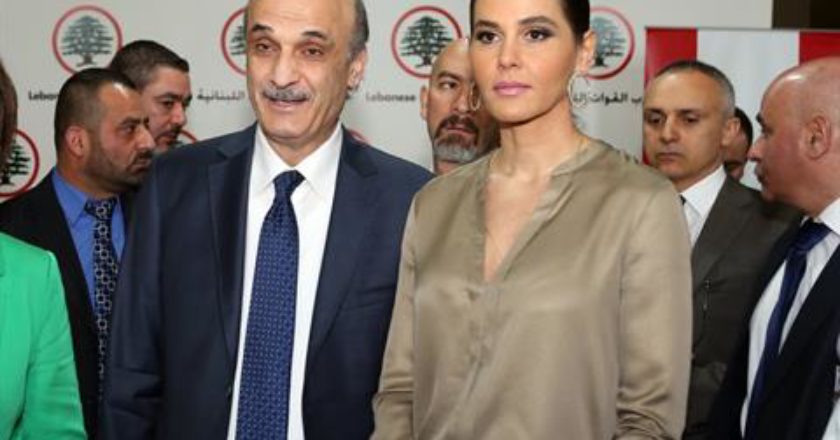
MAARAB, Lebanon: The Lebanese Forces nominated its leader Samir Geagea to run for the presidency Friday, in the opening salvo of what is set to be a contentious race.

The announcement came after a one-hour extraordinary meeting of the LF’s leadership in Geagea’s leafy mountain fortress-like residence at Maarab, north of Beirut.

“The executive committee of the Lebanese Forces decided unanimously to nominate the party’s leader Samir Geagea for the Lebanese presidential elections,” LF MP George Adwan announced at a news conference after the meeting.

Geagea, whose followers refer to him as “Al-Hakim,” a word that means both ‘the doctor’ and ‘the wise one,’ is the first political heavyweight to announce his candidacy.

In a speech before the vote, Geagea said that Lebanon was at a crossroads after the “continuous deterioration” of its security and economy.

“Lebanon’s image abroad was hit and confidence in it has been shaken,” Geagea said, addressing dozens of party cadres, MPs and officials.

“Lebanon’s borders are no longer clear due to its widespread penetration by armed groups coming and going to fight in Syria,” he added. “The state’s sovereignty has been widely violated by illegitimate arms in the interior.”

Lebanon has witnessed a spate of security incidents, clashes and attacks linked to the Syrian war. Radical groups that have claimed responsibility for the attacks targeting areas associated with Hezbollah often cite the party’s intervention in Syria as the grounds for their operations.

The LF sought to portray Geagea’s candidacy as a radical step needed to “shock” the country toward recovery. The party also said that Lebanon needed a strong president with a clear position on the key issues facing the country, rather than a bland consensus choice selected by foreign patrons.

Adwan said that previous presidents were often chosen by foreign leaders, were not independent, or lacked “color, smell and opinion.”

“The nomination of Dr. Geagea is to break this model and to say that the time has come for the Lebanese to choose a president made in Lebanon who has clear opinions,” he said.

Geagea’s persistent and vocal criticism of Hezbollah’s involvement in Syria raises questions about his ability to garner enough support from across the aisle to propel him to the presidency.

His announcement also pre-empted the March 14 political bloc’s deliberations on who to back in the presidential race.

President Michel Sleiman’s six-year term ends on May 25. The two-month constitutional period in which Parliament must convene and elect a new president started last month.

Geagea, 62, is a staunch critic of Hezbollah, Iran and the Syrian regime, and is also a key pillar of the Western-backed March 14 coalition.

He hails from the north Lebanon village of Bsharri, and became the head of the Lebanese Forces in 1986, when the group was a militia. He was arrested in 1994 over his suspected involvement in a bomb attack on the Our Lady of Salvation Church the same year.

He was also sentenced to life imprisonment over his alleged involvement in the assassination of Prime Minister Rashid Karami in June 1987 and was not released until July 2005, when Parliament passed an amnesty law.

Karami’s nephew, former minister Faisal Karami, called Geagea’s nomination a “black day” for Lebanon that showed what he described as the country’s “moral decline.”

LF MP Fadi Karam hit back at Karami, claiming he sought to relive the “black days” of Lebanon’s history and condemning his support for the Syrian regime.

Geagea refused to share power with Hezbollah in February in Prime Minister Tammam Salam’s “national interest government” due to the party’s involvement in Syria.

But in a sign of a softer tone toward his rivals, Geagea refrained from naming Hezbollah in his opening speech, and described as a “positive step” the statement by his potential rival, Free Patriotic Movement leader Michel Aoun, who said he would not run if Geagea was nominated for the presidency.

He also praised Hezbollah Minister of State for Parliamentary Affairs Mohammad Fneish after a statement by the latter saying it was Geagea’s right to run for presidency.

“When Hezbollah takes the decision to abide by the Constitution and the laws and build the state, the LF and its leader will meet with them and join hands to build the state,” Adwan told reporters.

But responding to skepticism from reporters who questioned whether Geagea coordinated his announcement with the rest of the March 14 bloc, the LF expressed confidence that their allies would back Geagea.

Adwan said that March 14 leaders had long been aware of Geagea’s candidacy and that he had unrelentingly championed the alliance’s principles.

“It is natural that he would be nominated on behalf of March 14,” Adwan said.

In the first reaction by a March 14 official, Deputy Speaker Farid Makari hailed the nomination of Geagea, describing his chances of winning the support of the rest of the March 14 coalition as “very high.” Speaking from Parliament, he said: “Geagea is certainly a key figure in March 14 and he has all our respect and love.”

But in an indication that Geagea will face additional hurdles before securing the bloc’s nomination, Telecommunications Minister Boutros Harb hinted in a TV interview that he may also run for the post.

In an appearance on LBC, Harb said that if he were to run for presidency it would be on a platform of “rebuilding Lebanon,” but insisted that the March 14 alliance should only nominate one candidate.

Earlier in the day, Future MP Ahmad Fatfat also said the bloc had not yet decided on its nominee.

Salam called for a “made in Lebanon” president, saying in an interview that his government would work to create the “right atmosphere” for the presidential election to be held.

“I hope the next president will be purely Lebanese-made as was the national interest Cabinet,” Salam said in an interview with General Security magazine that is set to be published Saturday.

“All regional and international forces that affect Lebanese affairs support electing a new president,” he said, adding that the election would create political stability.

“We are looking forward to this constitutional deadline and we do not want any vacuum in the presidency,” he said.

Source: The Daily Star
Send this to friend