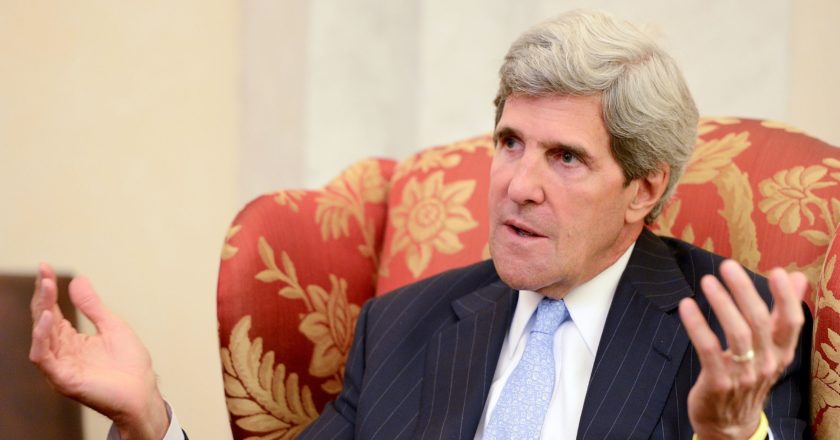
John Kerry
Secretary of State
Beirut, Lebanon
June 4, 2014
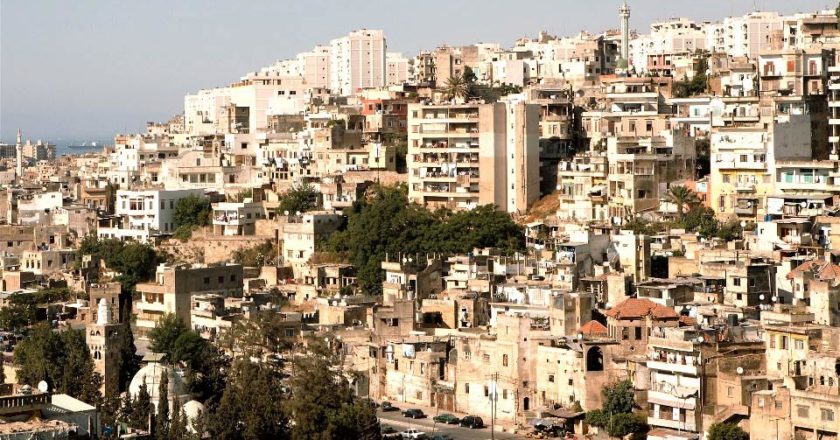
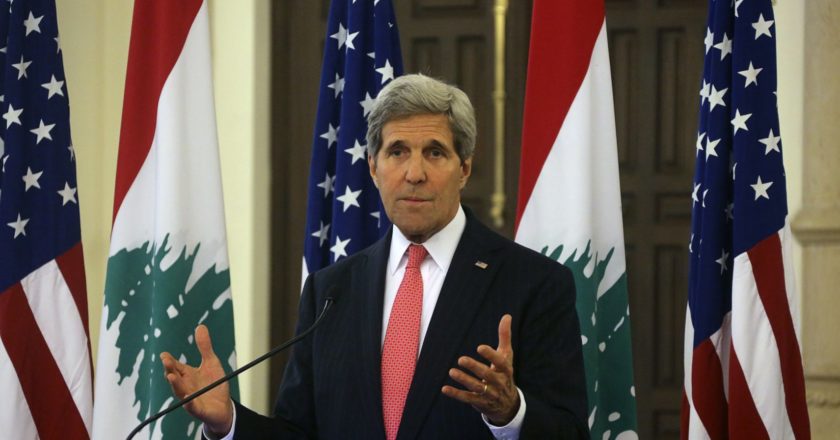
SECRETARY KERRY: Well, good afternoon, everybody. Thank you very much for waiting for a few minutes. It’s a great pleasure for me to be back in Beirut. I’ve been here many times before, unfortunately never with enough time to stay and enjoy the beauty of the city, which I would like to do. But this is the first time nevertheless that I’ve been able to be here as Secretary of State, and I told the prime minister earlier, somehow we have to arrange the problems of the world and the region so that we can spend more time.
Lebanon is obviously much more than a beautiful country, which it is, it’s a very important country, and it’s very important to the security of the region and beyond. And I think everybody knows that the United States of America is deeply committed to Lebanon’s security, to its stability, to its sovereignty, and to supporting the Lebanese people during this difficult period.
We all know that the consequences of the civil war in Syria reach well beyond Syria’s borders, and Lebanon is feeling those consequences as much as any other country or community. Nowhere, in fact, has the international impact of what is happening in Syria been felt more in many ways than what is happening here. And that particularly includes the 1,600 cities, towns, and villages across Lebanon that are now hosting refugees of all ages.
I have personally had the opportunity to meet with some of those refugees, the Syrian refugees, who are now in the Jordan camps. And when I was there, it was impossible for me not to feel the incredible frustration and anger and loss that those refugees felt. If it isn’t enough that they don’t see their life situation changing, what they also don’t see is they don’t see the war ending. And so for them, life is difficult, it’s bleak every day.
I’m very proud that the United States of America is leading the charge and responding to this moral and this security imperative. And today, I am pleased to announce on behalf of the American people and on behalf of President Obama another $290 million in humanitarian assistance for those affected by the conflict, both inside Syria and the communities throughout the region where they have taken refuge.
With the newest contribution that I’ve announced today, the United States has now committed more than $2 billion to support refugees and the nations that have opened their doors to them. Let me be clear: There is still an enormous need on the ground that is not being met, and I’m not going to stand up here and pretend that the two billion or the money we’re giving today is enough. Also for those refugees, just being supported in a refugee camp is not enough. It doesn’t change their lives, it doesn’t end the war, it doesn’t speak to their day-to-day sense of loss and abandonment, and it certainly doesn’t provide them with the long-term security and opportunity that they deserve.
So all of us, all nations, have a responsibility to try to end this conflict. And I particularly call on those nations directly supporting the Assad regime – in what has become a grotesque display of modern warfare by a state against its own people – I call on them – Iran, Russia, and I call on Hezbollah, based right here in Lebanon – to engage in the legitimate effort to bring this war to an end. I also call on the international donors who have made pledges, to deliver on those pledges. It is important now, critically important, to support Lebanon and to support others in the region who are suffering the consequences of this humanitarian crisis.
As everybody knows who lives here and comes from Lebanon, Lebanon is different in the way that these refugees are being absorbed because there are not specific camps, and that has provided its own tension, its own form of domestic challenge. And the fact is that they are spread throughout those 1,600 communities that I talked about. That puts a burden on communities, puts a burden on schools, puts a burden on infrastructure. And so it’s important for all of us to recognize the human catastrophe that is unfolding before our eyes, and that is why we in the United States have worked so hard to try to push for a political solution, which is the only real solution to this conflict.
A large portion of the assistance that I just announced today, $51 million, will go directly to refugees in Lebanon and the communities that I just mentioned that host them here – and this combined with the assistance that we’ve already announced brings to about $400 million that the United States has supported just to deal with the refugee situation here in Lebanon.
The devastating events in Syria have obviously gone on for far too long, and I’m proud that we have stood by the people of Lebanon, the Lebanese people, from day one. We will continue to support the people of Lebanon. I want to make it clear: In my conversation today with Prime Minister Salam I made it clear that President Obama is deeply committed to continuing to support Lebanon, continuing to support the security initiatives, and we will continue to remain engaged in our efforts to try to find a way to move forward.
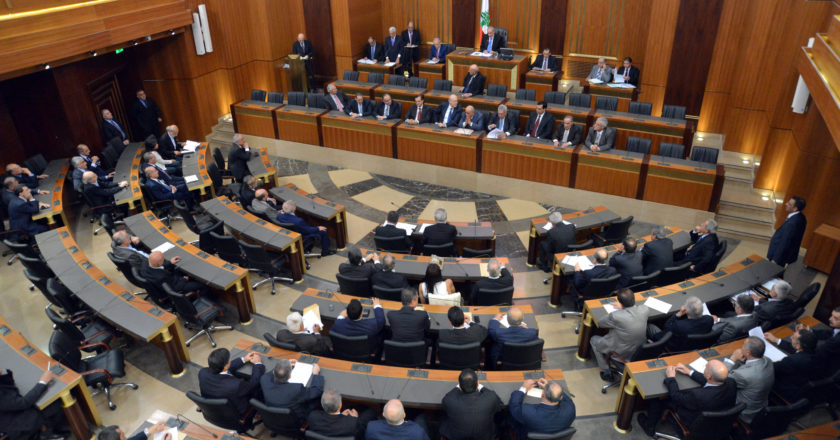
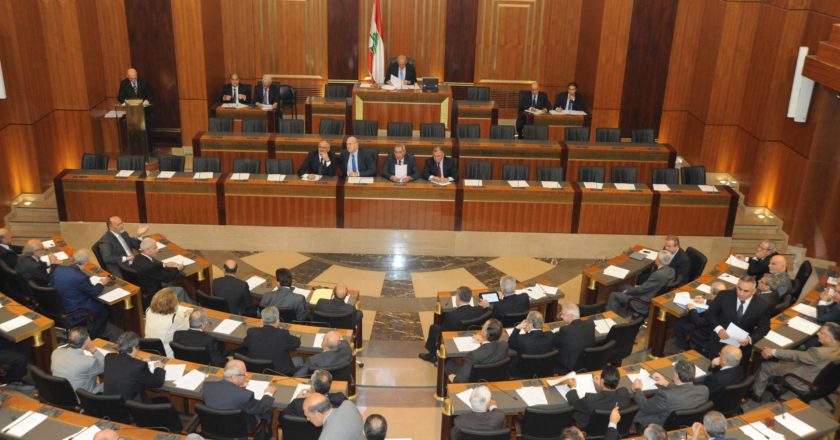
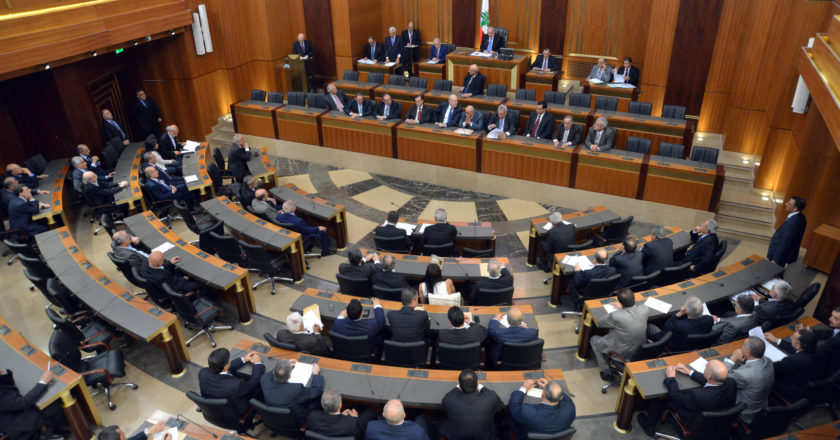
Lebanon’s security for years has been of paramount concern to the United States. And that is why I have to say that the current political stalemate here in Lebanon is deeply troubling. It’s unfortunate that the parliament did not elect a president on schedule, as the Lebanese constitution requires. And now it is far more important for the vacancy to be filled so that the people of Lebanon can reap the benefits of a fully constituted, fully empowered government. That is important for Lebanon, it’s also important for the region, it’s important for those who support Lebanon. And we need a government that is free from foreign influence, with a fully empowered president, and with the president and the parliament responding directly to the people and to the needs of the people of Lebanon.
Earlier today I reiterated my support to President Salam[1] in the meeting we just had, and I reiterated President Obama’s support for the stewardship of the Lebanese Government by Prime Minister Salam and his cabinet. And I thanked the prime minister for the principles that we share and for his commitment to those principles. This is not a time for business as usual. The challenges are just too significant, and the challenges are all interconnected. Lebanon needs and Lebanon deserves to have a fully empowered, fully functioning, complete government. And we hope the Lebanese parliament will select a president quickly.
In the meantime, I did assure the prime minister that the United States will remain a strong and reliable partner, and we will continue to support Lebanon and its institutions. That includes support that is aimed at building the capacity of the Lebanese armed forces and the internal security forces in order to help them be able to secure Lebanon’s borders, to be able to handle the refugee flows, and to be able to calm the tensions and combat terrorism. In fact, we are seeking, right now, to increase our assistance to those institutions.
So the bottom line is this: The bottom line is that a secure and stable Lebanon is a prerequisite for a secure and stable region, and the United States will continue to work closely with our partners in Lebanon in order to protect against any of those who seek a different goal.
Thank you very much, and I’d be delighted to answer a few questions.
MODERATOR: The first question will be from Lesley Wroughton of Reuters.
QUESTION: Thanks, Mr. Secretary. Why did the United States feel it had to recognize the Unity Palestinian Government immediately, when Netanyahu appealed publicly to the international community not to rush to do so? What does this new rift mean for the U.S.-Israeli relations and chances of reviving the peace talks?
On a Lebanon question: What do you fear most from a continued political vacuum in the Lebanese presidency? And do you think the Lebanese politicians can ever reach an agreement when Saudi Arabia and Iran, which are the regional patrons who back rival Lebanese blocs, are at odds over the war in Syria?
SECRETARY KERRY: Well, Lesley, let me begin by, if I can, making it very, very clear, in answer to the terminology you used in your question, the United States does not recognize a government with respect to Palestine, because that would recognize a state and there is no state. This is not an issue of recognition of a government. This is an issue of whether or not, under the terms of our law, there would be any kind of contact or work with that government in some form or another. Now, I have spoken with both Prime Minister Netanyahu and I’ve spoken with President Abbas over the last few days. And we’re going to remain in very close touch. And I want to make it very clear what – exactly what we are doing.
President Abbas made clear that this new technocratic government is committed to the principles of nonviolence, negotiations, recognizing the state of Israel, acceptance of the previous agreements and the Quartet principles, and that they will continue their previously agreed upon security cooperation with Israel. Now, that’s what he has said. He has formed an interim technocratic government that does not include any ministers who are affiliated with Hamas. We have checked that. In fact, most of the key cabinet positions – including the prime minister, the two deputy prime ministers, and the finance ministers – are the very same as in the prior government. And they are all technocrats unaffiliated with any political party and they are responsible for facilitating new elections.
Now, let me be clear. As we said, based on what we know now about the composition of this technocratic government which has no ministers affiliated with Hamas and is committed to the principles that I described, we will work with it as we need to, as is appropriate. We will work with it in that context, as, I might add, Israel is obviously working with it for security purposes. It has transferred revenues. There are certain day-to-day needs.
But I want to make it very clear we are going to be watching it very closely, as we have said from day one, to absolutely ensure that it upholds each of those things it has talked about, that it doesn’t cross the line. And the law in the United States regarding assistance and engagement states specifically that it makes a judgment about undue influence by Hamas in any way.
At the moment, we don’t have that, and so we are looking to see as we go forward on a day-to-day evaluation – we will measure the composition, we will measure the policies of the new technocratic government, and we will calibrate our approach accordingly. So that is, I think, a much more precise description of exactly what the status is today.
Hamas is a terrorist organization. It has not accepted the Quartet principles. It continues to call for the destruction of Israel. It continues even as it moves into this new posture. And so we are obviously going to watch closely what happens, but we will – as I’ve said, as needed, as long as those conditions are met that have been described – work with it in the constraints that we are obviously facing.
QUESTION: (Off-mike.)
SECRETARY KERRY: I’ve had several conversations with Prime Minister Netanyahu. We’re completely talking about this on a day-to-day basis. Israel is our friend, our strong ally. We are deeply committed. We’ve said again and again the bonds of our relationship extend way beyond security. They are time-honored and as close, I think, as any country in the world. We will stand by Israel, as we have in the past. There is nothing that is changing our security relationship. That is ironclad. And I deal with Prime Minister Netanyahu on a constant basis as a friend as well as as the prime minister of the country, and we’ve had very constructive, straightforward, normal conversations about this process of exactly how we measure things going forward. And I think we will coordinate, as we have throughout my time as Secretary of State. And I can tell you, in the years before I became Secretary, President Obama has constructed a security relationship with Israel that is more interconnected, more cooperative, more extensive than any security relationship between the United States and Israel at any time in history.
MS. PSAKI: The next —
SECRETARY KERRY: And that will continue.
MS. PSAKI: Pardon me. The next question is from Khalil Flayhan from An-Nahar newspaper.
SECRETARY KERRY: I didn’t answer the second part of her question.
MS. PSAKI: All right.
SECRETARY KERRY: Excuse me. With respect to the Saudis – I could have ducked it, but I’ll answer it. With respect to Saudi and Iran, there is no question that both have interests and have expressed them with respect to what is happening here. Our hope is that as in the past, Lebanon has ultimately been able to find its way forward. I said in my prepared comments that we want a Lebanon that is free from outside pressure and outside interference, and we hope that in the days ahead, rapidly it will be possible for a president to be elected by the parliament and provided to the people of Lebanon. People of Lebanon need and deserve a fully functioning, complete government that can meet the serious challenges of this moment, and we hope that will happen. And that’s part of the reason why I’m here today, is to hear firsthand from the prime minister where that is, what he thinks the road forward could be, as well as to learn from him about the impact of the Syrian situation and his views of the Syrian situation going forward.
MS. PSAKI: The next question is from Khalil Flayhan from An-Nahar newspaper.
QUESTION: Do you have any proposal to collaborate to resolve the difficulties to elect a new Lebanese president? And do you think Syrian presidential election will have any impact on the Lebanese presidential election?
SECRETARY KERRY: With respect to the question of do I have any proposal with respect to the election of a president, I have an urging, but not a proposal. It is not up for the United States to come in and make a proposal. This is up to the people of Lebanon, and I come here with President Obama’s encouragement to encourage the government to move forward. But we don’t have a candidate; we’re not in the business of trying to select or put proposals on the table. This is up to the parties here in Lebanon. It’s up to the leaders of Lebanon.
What we are trying to do is draw for them the picture that we see of how the absence of a president complicates matters for other countries that care about this region, that the capacity of the armed forces to respond to a crisis could be affected by the absence of a president. The confidence of the people of the country and the fabric of the politics of the country could be affected by the absence of a president. Ultimately, the tensions that could grow within a cabinet, or outside of the cabinet within the parliament and in the politics of the country, could become tenser as a result of not having a sense that there is a respect for the national pact and for the balance that should exist within the governing of Lebanon.
So I think all of these issues are important, not just to the people of Lebanon, but they’re important to those of us who care about Lebanon and care about the stability of the country and of the region as a whole.
MS. PSAKI: The final question is from (inaudible) from (inaudible).
QUESTION: Thank you. Thank you very much, Mr. Secretary. My question regards our next stop to Paris, France. You have two disagreements with the French Government. You have a disagreement on the warship Paris wants to sell to Moscow, and you have a disagreement on the fine against the French bank BNP for having violated the embargo. So on the first issue on the warships, how you hope for to convince the French Government not to deliver the warship amid discussions in Brussels about further sanctions against Russia?
And on the French bank BNP, your French counterpart Laurent Fabius came out and said that the fine is not sensible. So is it sensible, and is there room for negotiations between the U.S. and France on that issue? Thank you.
SECRETARY KERRY: Well, we have expressed concern, but we have not – when you say we have “disagreements,” I really don’t think that I would characterize them as broad-based disagreements between the countries. They are issues, and there is a concern – not just – I mean, not by the United States. I heard the concern expressed today by President Poroshenko, President-elect Poroshenko, who is concerned about the transfer of this – these ships and the possible presence in Sevastopol and the impact on them. So this is a broader kind of issue that arises in international affairs, but it’s not a conflict, and I don’t think that it’s – I wouldn’t describe it as anything more than something that we need to talk about and work through in the context of our relationship. And we will.
With respect to the BNP, that’s an issue of our justice system. I don’t have anything to do – and the Treasury Department and the Justice Department – I don’t have anything to do with the decision that gets made or how it gets made or what the levels are or the appropriateness of that. We obviously want whatever it is to be fair and to reflect an appropriateness to whatever it is that is alleged to have taken place. And I would have to further evaluate that, and even then I’m not sure that it belongs in our comments publicly between the two countries. But I’m confident that it’s something that we can work through and deal with, and I’m confident we will have some discussion about it in that context.
Thank you all.
QUESTION: (Off-mike.)
SECRETARY KERRY: They’re not going to let me. I have a very tight schedule. I apologize. I apologize.
QUESTION: (Off-mike.)
SECRETARY KERRY: Well – you have a question?
QUESTION: (Off-mike.)
SECRETARY KERRY: What do – do you want to ask a question?
QUESTION: (Off-mike.)
SECRETARY KERRY: No, I’d be happy to take your question.
QUESTION: Mr. Secretary, the timing of – everybody’s asking why today you came to Lebanon. They’re saying because of the elections in Syria, and you’ve been always saying that Assad would fall, his regime would fall, and it didn’t. Yesterday we witnessed election in Syria, and now we have no president. And you’ve been always saying that we would have a president, and we didn’t. So why the timing of your visit today? Is it because of the miscalculation that there was – that you —
SECRETARY KERRY: No, no.
QUESTION: Then why is —
SECRETARY KERRY: My – first of all, I’m – excuse me. First of all, I’m very happy to take your question.
QUESTION: (Off-mike.)
SECRETARY KERRY: Okay, yeah. But you weren’t so sure before. But secondly, let me just say to you unfortunately, when we are traveling, we do have a schedule and we have to try to keep the schedule. We try to answer as many questions as we can. I am here today because we had time and we thought it was very, very important to come to Lebanon. I have not been able to come to Lebanon and meet – and I have more meetings to go to now – I have not been able to do that because of the press of the negotiations we were involved in and the schedule that I’ve had.
But today, because of what is happening to Lebanon, because of the stalemate in its government, because of the influx of refugees, because of the very serious challenges here in terms of stability long-term, relationship with the region, I wanted to come and talk to the prime minister and meet with people so that we can continue to have an impact, hopefully in a positive and constructive way.
Now with respect to the elections that took place, the so-called elections, the elections are non-elections. The elections are a great big zero. They’re meaningless, and they’re meaningless because you can’t have an election where millions of your people don’t even have an ability to vote, where they don’t have an ability to contest the election, and they have no choice. So this – nothing has changed between the day before the election and the day after, nothing. The conflict is the same, the terror is the same, the killing is the same, the problem for the refugees is the same, regrettably, and we are trying to do something about that.
Now it’s hard. It’s not easy. But we’re committed to trying to do something about that because we believe the humanitarian crisis is one of the worst catastrophes any of us have viewed. But we also have to – it’s not up to us to decide when or how President Assad goes. It’s up to people in other countries, and that’s the most important thing – and specifically up to the Syrians, and that’s the bottom line here. We believe in a political settlement. We will continue to fight for a political settlement.
Thank you all very, very much. Appreciate it.
# # #