
Detroit TV anchor upsets Muslim community in Michigan for ISIS comment

UPDATE: Harlan apologized on Thursday saying: “In no way did I mean to imply that because of our community’s make up, there was a higher risk of ISIS threats.”

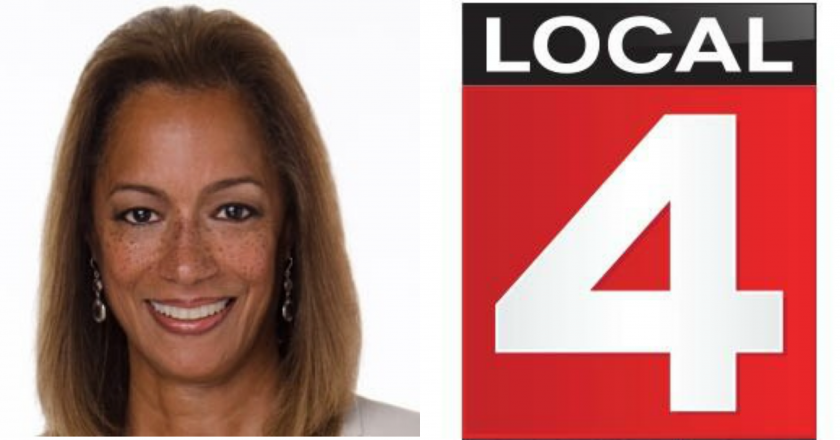
(DEARBORN, MI) — WDIV-TV Local 4 news anchor Carmen Harlan upset many Michigan Muslims after making a comment on the state’s alleged ties to ISIS during a broadcast on the Detroit NBC affiliate on Wednesday.

When asked about a possible “ISIS threat in Michigan”, Harlan said “given the fact that we have the largest Arab population outside of the Middle East, I guess this should not come as a real surprise.”

Many Arab organizations have voiced concern over Harlan’s comments, urging the TV station to apologize.

“This shocking lapse of professional conduct was directed against law-abiding citizens who strive to create vibrant, diverse communities wherever they live,” said Fatina Abdrabboh, director of the Michigan American-Arab Anti-Discrimination Committee.

“Naturally, this type of analysis is very problematic for our community as we watch the impact of blanket indictments on the Arab-American and Muslim community that have nothing to do with the ISIS phenomenon at all.”

The threat of ISIS in Michigan has not been authenticated by security officials, according to media reports.

“These offensive comments based on an unconfirmed threat only stir up animosity toward Michigan’s Arab community,” said Lonnie Scott, executive director of Progress Michigan. “Comments like these are an example of racial profiling at its worst and Carmen Harlan should apologize immediately.”

The Campaign to TAKE ON HATE, led by the National Network for Arab American Communities (NNAAC), a program of ACCESS, urged Harlan to apologize on air.

“Carmen Harlan’s comment about the Arab American community is appalling, offensive and dangerous,” said Nadia Tonova, director of NNAAC. “As a reporter, she has a responsibility to remain objective in her reporting and not draw conclusions for her audience. We request that WDIV immediately address this racially charged comment.”


Journalism freedom organization reinforces support for Lebanese journalist on trial

(BEIRUT, LEBANON) — Reporters Without Borders reiterates its support for Lebanese TV journalist Karma Khayat, whose trial before the Special Tribunal for Lebanon (STL) in The Hague on charges of contempt of court and obstructing justice began last week.

Created to investigate Lebanese Prime Minister Rafik Hariri’s assassination in 2005, the STL accuses Karma Khayat and her Arabic-language TV news channel, Al Jadeed TV, of endangering supposed confidential witnesses by filming them for a report after learning of their identity from an anonymous leak.

The report, which Al Jadeed TV broadcast in instalments from 6 to 10 August 2012, has not been removed from the station’s website or YouTube account. The charges were originally announced in April 2014.

This is the first time that a TV station has been the subject of a prosecution by an international court. The company that owns Al Jadeed TV, New TV S.A.L., is also being prosecuted. The STL is the first international court to be set up to investigate a single act of terrorism.

Now Al Jadeed TV’s vice-president, Khayat says the report’s aim was to draw attention to the STL’s problems and did not endanger the supposed witnesses because their names and their faces were pixelated in the video footage. The STL accuses her of undermining the public’s confidence in its ability to protect witnesses.

She is facing the possibility of a 7-year jail sentence and a 100,000-euro fine at the end of the trial, which began on 16 April.

Reporters Without Borders, which supports Khayat and her TV station, believes it is vital to preserve freely-reported news coverage in Lebanon at a moment in its history that is extremely delicate from both the political and security viewpoint.

We condemn the decision to try Al Jadeed TV and Karma Khayat, who are guilty solely of holding the STL to account by broadcasting information obtained from leaks,” Reporters Without Borders programme director Lucie Morillon said. “The media have a duty to question the way the courts operate and to encourage a public debate on this subject.”

International media that covered this story have not been charged. They include the Canadian broadcaster CBC, the German news magazine Der Spiegel and the French dailies Le Figaro and Libération, which used confidential documents and internal STL leaks.

Khayat told the judge on 16 April: “The International Court was created for us and with our money. It is our duty to monitor its work.” Her lawyer, Karim Khan, said Khayat and other Al Jadeed TV employees have received death threats in connection with the case.

According to our sources, the report’s two main aims were to show that confidential information was being leaked from within the TSL, thereby endangering the proceedings, and to highlight the fact that is was easy to access “protected” witnesses, who had not been briefed about the confidential nature of their status as witnesses.

The first session of the trial, which began with the prosecution presenting its arguments, is due to end tomorrow. The trial will resume on 12 May, when the defence will have three days to present its witnesses and arguments. No date has been set for the verdict.

Members of a group that supports Khayat and Al Jadeed TV attended the start of the trial. They include Florence Hartmann, a French journalist who was convicted of contempt of court by the International Criminal Tribunal for the former Yugoslavia.

The STL has also charged Ibrahim Al-Amine, the editor of the daily Al-Akhbar, and the company that owns his newspaper, with contempt of court and obstruction of justice. No date has so far been set for their trial.

Reporters Without Borders submitted an amicus brief on the Khayat case to the STL when a preliminary hearing was held on 13 May 2014.

Lebanon is ranked 98th out of 180 countries in the 2015 Reporters Without Borders press freedom index.

Reporters Without Borders – Press Release

VIDEO: Sheik tells Lebanese journalist to shut up, but she fires back

(BEIRUT, LEBANON) — Lebanese journalist Rima Karaki fired back on Monday night after an interview with Sunni scholar Hani Al-Seba’i turned sour.

Karaki was interviewing Al Seba’i about recent waves of Christians joining ISIS when he began discussing the historical consequences of Christian involvement. That’s when Karaki asked him to redirect the angle to present day.

Al Seba’i became combative after Karaki explained there was a time limit on his interview.

“Please don’t get all worked up,” she said. “We respect you and know you want to give a complete answer.”

But Al Seba’i wasn’t having it. “Are you done?” he asked. “Shut up so I can talk.”

Karaki fired back, asking him how a “respected Sheik can tell a TV host to shut up.” She later asked producers to cut off his microphone and move on with the program.

“Either there is mutual respect, or the conversation is over,” she said.

WATCH the video below:

Lebanese-Australian journalist honored for reports on ISIS

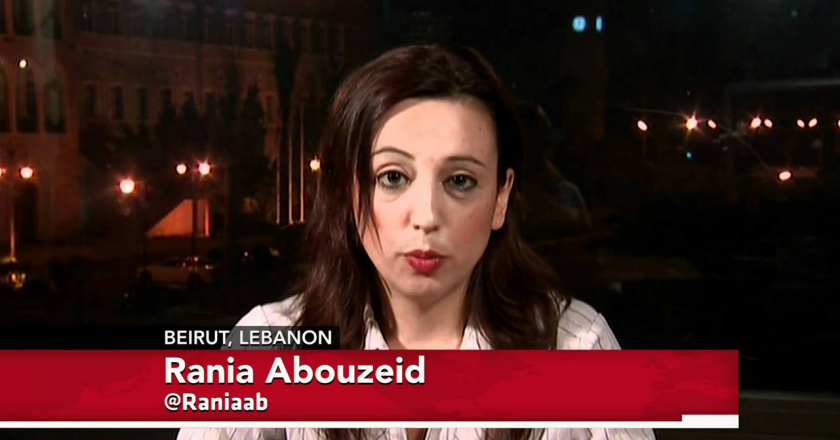
(SYDNEY, AUSTRALIA) — Lebanese-Australian journalist Rania Abouzeid was recently awarded with one of the highest honors in journalism for her extensive special reporting on the Islamic State and their emergence in Iraq and Syria.

Abouzeid will receive the George Polk Award at a ceremony in New York on April 10. The awards, given by Long Island University, place a premium on investigative and enterprising reporting that gains attention and achieves results.

The award committee released the following statement about Abouzeid:

Australian-Lebanese journalist Rania Abouzeid will receive the George Polk Award for Foreign Reporting for “The Jihad Next Door,” an extensive and authoritative account of the rise of the Islamic State, published online by Politico Magazine. Abouzeid gained access to Jihadist fighters and their leaders, showing how they used the conflict in Syria to gain strength and support, outflanking badly equipped and disorganized moderate rebels to form a powerful and more dangerous offshoot of Al-Qaeda.

Abouzeid, a daughter of Lebanese immigrants, has 15 years of experience reporting in the Middle East.

“Thank you for all kind words re (sic) Polk award,” Abouzeid wrote on Twitter. “Honored & humbled. Thanks to @politico which ran my piece at length. Congrats to other winners.”

To read Abouzeid’s award-winning report, click here.

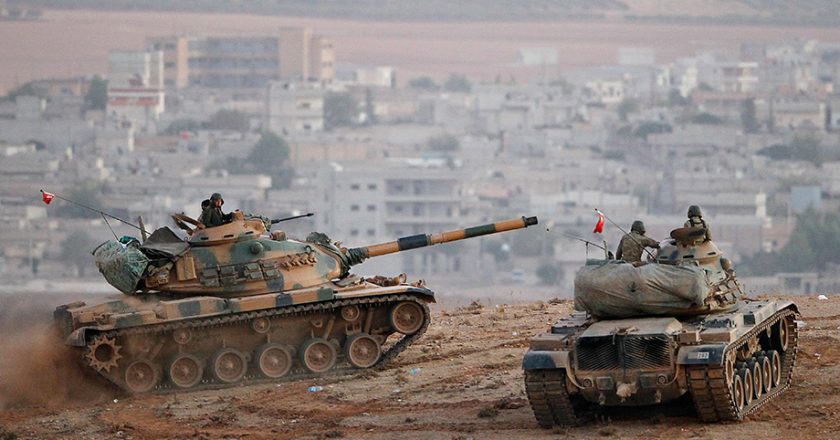
Turkey arrests 2 Lebanese journalists in Kobani

(KOBANI, SYRIA) — Two Lebanese journalists were arrested by Turkish authorities on Tuesday after filming final shots for a documentary in the border town of Kobani, Syria.

LBC reporter Firas Hatoum and freelance photographer Rony Rmeiti were taken into custody after reentering Turkey from Kobani, Al-Jadeed reporter Bassel Aridi told Beirut-based newspaper, The Daily Star.

“There was a problem with the way they entered Kobani and the way they left it,” Aridi said, without revealing any other details.

Hatoum was reportedly interrogated for several hours by Turkish forces before he was freed to return to Lebanon, according to LBC. It is still unclear if Rmeiti was also released.

The two journalists were expected to leave on Sunday, but severe weather kept them from departing.

Hatoum was previously taken into custody in 2006 for tampering with criminal evidence, after allegedly breaking into the home of Mohammad Zuheir Siddiq, a former witness involved in the ongoing investigation into former Prime Minister Rafik Hariri’s assassination.

Turkey jails more journalists than any other country in the world, according to the Committee to Protect Journalists. At least 221 journalists were imprisoned in Turkey in 2014.

EXCLUSIVE: Lebanese Examiner interviews Minister Ramzi Jreij

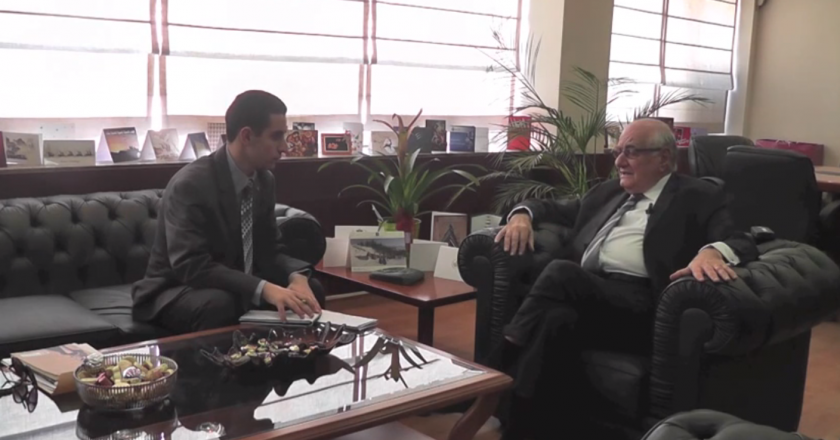
(BEIRUT, LEBANON) — Lebanese Examiner Managing Editor Charlie Kadado sat down for an exclusive interview with Lebanese Minister of Information Ramzi Jreij at his office in Beirut.

Minister Jreij talked about the current political climate in Lebanon and the importance of connecting to Lebanese expatriates.

WATCH the interview:

Lebanese anchorwomen are too sexy for Egypt

(CAIRO, EGYPT) — Lebanese anchorwomen may be a little much for Egyptian television viewers to handle these days.

Asharq Al-Awsat reports that Lebanese women are sparking controversy among conservative Egyptian TV executives because they’re considered “exotic” by the Egyptian general public.

It adds that Lebanese anchorwomen are more “relaxed” and “outgoing,” which threatens the jobs of homegrown journalists, who are generally more tense and impartial.

But the Lebanese style of broadcasting has boosted ratings and saved money for Egyptian TV channels, according to a TV executive speaking on the condition of anonymity.

“A satellite channel is essentially a business enterprise and Lebanese anchorwomen accept lower pay compared to others,” a senior executive at a private Egyptian TV channel told Asharq Al-Awsat.

“They are ready to work at any time, and are willing to go out in the field and present from the ground. As for Egyptian presenters, time is a major problem since they follow strict working hours.”

The analyst added, however, that Lebanese women have a “special appeal” for the Egyptian public.

Egyptian journalist Faten Abdul-Ma’boud, who works for Egypt’s state-owned TV channel, says it only becomes a problem when “Egyptians start copying their style of dress and presenting.”

Abdul-Ma’boud warns that Egyptian anchorwomen may feel compelled to change their fashion choices to resemble the Lebanese newbies.

“The way Lebanese anchorwomen dress is incompatible with the conventional dress code the Egyptian viewer is used to seeing,” she told Asharq Al-Awsat. “Many Egyptian households may not accept the ‘Lebanese style’ which they are not used to seeing on Egyptian screens.”

Among the new Lebanese faces on Egypt’s TV screes are Raghda Shalhoub, a new addition to Al-Hayat TV, and Liliane Daoud, who was recently hired by ONTV.

Farouk Abu Zeid, head of the media department at Egypt’s Misr University for Science and Technology, said the job threat for homegrown Egyptian journalists is an “over-exaggeration.”

“There is no problem; the number of Lebanese TV presenters working in Egypt currently stands at just between 20 and 30,” he said.

Radio program ‘Escale’ highlights Lebanese emigrant success

IMG_0785

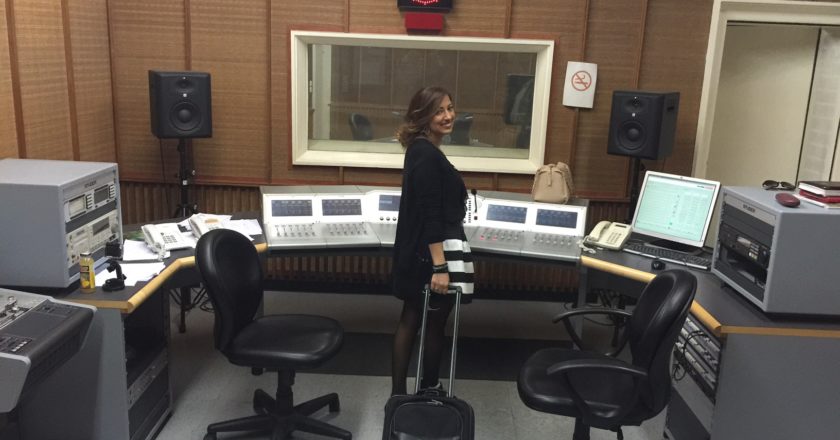
(BEIRUT, LEBANON) — Radio program ‘Escale’ which airs on state-run Radio Lebanon, has expanded to include emigrant interviews and perspectives on global news from around the world.

Lebanese journalist Rimelle Nehme, who has concentrated her interests on emigrant news media, says she interviews Lebanese guests in new cities each week in a virtual ‘layover,’ or ‘escale.’

“Escale is the only broadcasting program about emigrants,” said Nehme, who added that ‘Ecale’ and Radio Lebanon is under the jurisdiction of the Ministry of Information. “In each episode, we talk to guests in Brazil, Sydney, Detroit, the Gulf, and many, many more.”

Nehme says she is fulfilling part of the government’s duties to reach out and communicate with emigrants. She says her interviews prove that Lebanese ambition prevails no matter the geographical location.

Nehme admits she previously looked at political and economic issues from a negative perspective in Lebanon, but says working with emigrants has completely changed her perspective.

“I met pure and successful Lebanese emigrants,” she said. “It reflects the Lebanese style of success — it makes me escape the conflicts to see a positive and patriotic image of Lebanon.”

‘Escale’ hopes to reach out to more emigrants in an effort to keep them connected and invested in their homeland.

Nehme freelances for several other news publications and broadcasting outlets, include As-Safir Newspaper, where she publishes monthly editions of emigrant stories and profiles. Her most recent publication sheds light on the Lebanese community in Muscat, Oman, where she spent two weeks interviewing influential Lebanese-Omanis.

‘Escale’ airs on Radio Lebanon, 98.5 FM, Thursday at 4pm with reruns on Saturday at 9pm.

Lebanese-American journalist dies in ‘suspicious’ car accident

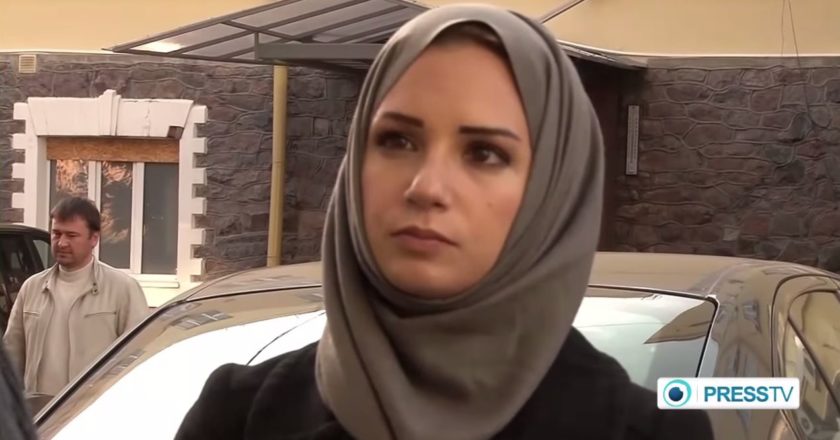
(BEIRUT, LEBANON) — A Lebanese-American journalist covering the Syrian conflict for Iran’s Press TV was killed in a car accident in Turkey, which her family and employer says was deliberately planned by Turkish authorities, according to the news agency.

Press TV says Serena Shim was killed in a “suspicious” car accident near the Turkey-Syria border on October 19 as she was working to cover the ongoing war in the Syrian town of Kobani.

She was reportedly going back to her hotel from a report scene in the city of Suruç in Turkey’s Urfa Province when their car collided with a heavy vehicle. The identity and whereabouts of the truck driver remain unknown.

Shim, a Lebanese-American mother of two, covered reports for Press TV in Lebanon, Iraq, and Ukraine.

On October 19, she told Press TV that the Turkish intelligence agency had accused her of spying probably due to some of the stories she has covered about Turkey’s stance on the Islamic State group in Kobani and its surroundings, adding that she feared being arrested.

Kobani and its surroundings have been under attack since mid-September, with the IS militants capturing dozens of nearby Kurdish villages.

Press TV News Director Hamid Reza Emadi called on the Turkish government “to find out exactly what happened” to Serena, describing the accident as “suspicious,” the report said.

Al-Jazeera host faces slander charges over Lebanese Army comments

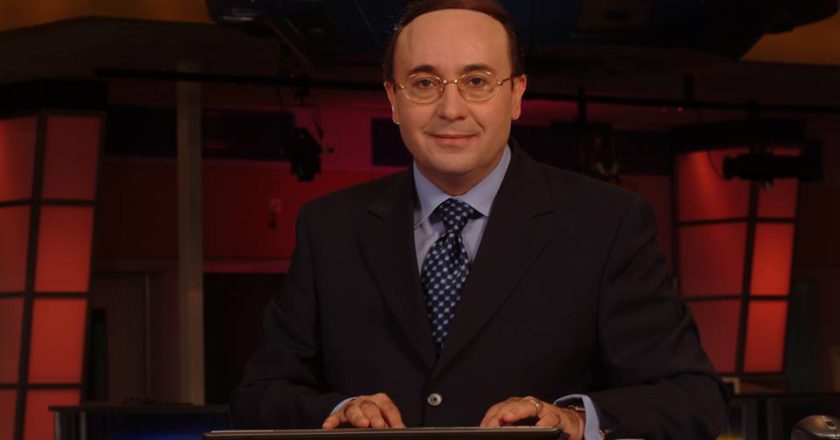
(BEIRUT, LEBANON) — A lawsuit was filed against Al-Jazeera TV anchor Faisal al-Qassem on Monday by Lebanese lawyers over anti-Army remarks he made over the weekend.

Qassem is widely recognized as an anti-regime Syrian journalist and host of Al-Itijah al-Muakis on Al-Jazeera.

Qassem posted on his Twitter account that the only achievements of the Lebanese Army has been shooting video clips with Lebanese singers Wael Kfoury, Najwa Karam, Elissa, and Haifa Wehbe.

Outraged by the comments, a delegation of Lebanese lawyers filed a lawsuit against Qassem for violating Articles 295 and 157 of the Lebanese Penal Code.

According to a statement released by the lawyers Monday, the purpose behind the lawsuit was Qassem’s remarks amounted to a “provocation of Lebanese public opinion through indirect incitement against the Army.”

His tweets are a violation of Article 295 of the penal law, according to the statement.

In addition to voicing contempt against the Army via a publicized medium mentioned in Article 209, Qassem has also violated Article 157, which can result in imprisonment for up to three years.

A group of Lebanese activists held a protest at the offices of Al-Jazeera television station in Beirut Sunday expressing anger over comments made by a journalist against the Lebanese Army.

Lebanon’s state prosecution office called Qassem for a hearing on October 8.

Send this to friend