
Hungary posts ads in Lebanon warning migrants against illegal entry

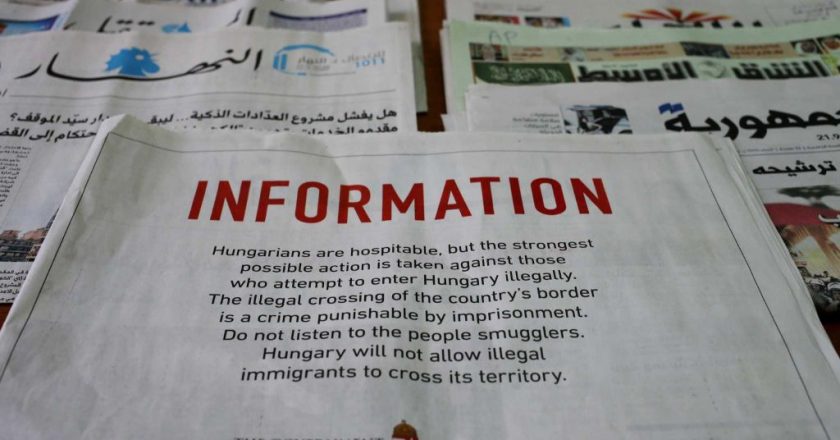
(BEIRUT) — The Hungarian government posted ads in Lebanese and Jordanian newspapers on Monday, threatening to arrest migrants who enter the country illegally.

The move comes as European leaders scramble to address the Syrian refugee crisis, as tens of thousands make the trek to Europe.

The full-page advertisement was published in several newspapers, including Lebanon’s leading An-Nahar. The Hungarian government said the “strongest possible action is taken” against people who attempt to enter illegally.

“Do not listen to the people smugglers. Hungary will not allow illegal immigrants to cross its territory,” the advertisement said in both English and Arabic.

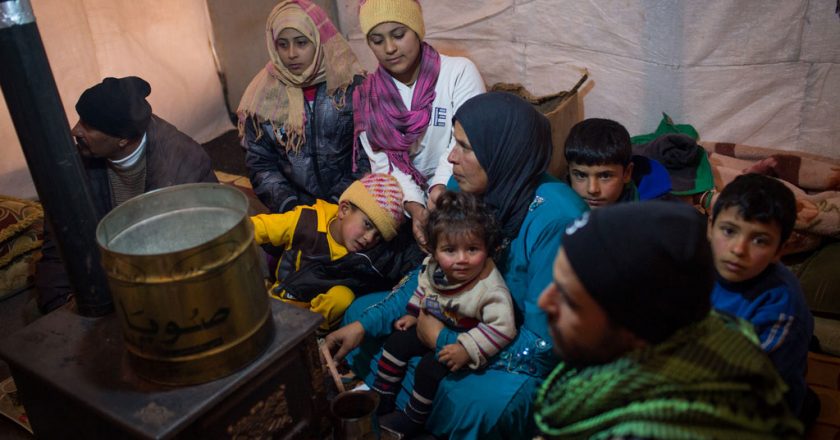
Lebanon, a country of 4.5 million people, has over 1.1 million Syrian refuges, many of whom have already attempted to migrate to Europe because of dwindling aid.

Hungary closed its border with Serbia on Sept. 15 and recently erected a steel barrier at the Beremend border crossing with Croatia to try to slow the flow of migrants.

Earlier this month, Denmark’s Ministry of Immigration, Integration and Housing posted advertisements in Lebanese newspapers aiming to deter migrants, saying that the Scandinavian nation has reduced social aid to migrants by 50 percent recently.

Denmark warned that illegal migrants will be deported immediately.

Meanwhile, German vice chancellor Sigmar Gabriel urged the international community to increase aid to Mideast countries hosting millions of Syrian refugees, saying this is key to slowing migration to Europe.

Gabriel, who was to start a visit to Jordan on Monday, said wealthy Gulf states “aren’t paying” and suggested the United States could contribute more. Aid agencies requested $7.4 billion for the Syria crisis for 2015, but received only 38 percent.

Gabriel told German TV on Sunday that the situation in host countries is “dramatically bad.”
Lebanon to receive $75.5M in US aid to Syrian refugees

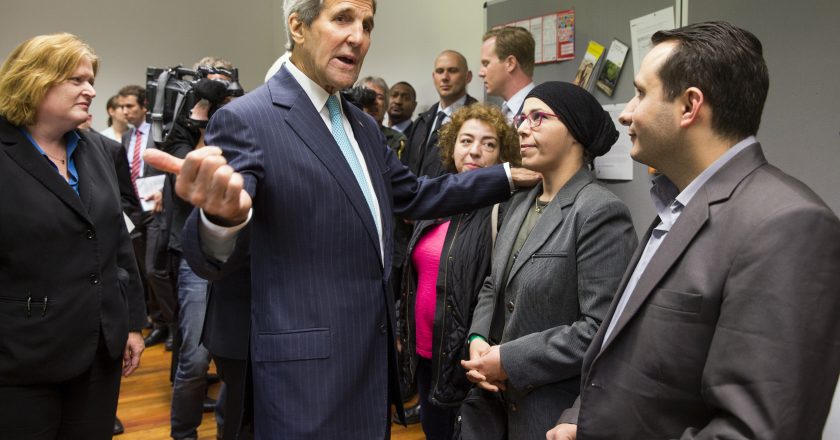
(WASHINGTON, DC) — The United States Department of State announced on Monday that Lebanon will receive $75.5 million in U.S. humanitarian aid to fund Syrian refugee programs and makeshift camps in the country.

The U.S. acknowledged that Lebanon hosts the highest number of refugees per capita with over one million Syrian refugees, and 45,000 Palestinian refugees from Syria.

According to the report, the additional U.S. support will also fund “vulnerable Lebanese communities” by renovating the municipal water and sanitation systems, and supporting local schools.

“With the additional funding, the UN and international organization partners in Lebanon can continue to deliver shelter assistance, education, healthcare, cash assistance for emergency needs, and basic relief items like blankets, heaters, and hygiene kits,” the report said.

A portion of funding will also be distributed to the UN Relief and Works Agency for Palestine Refugees in the Near East program, the report added.

Lebanon has received $965 million in U.S. humanitarian aid since 2012, according to the U.S. Embassy in Beirut.

The White House announced on Monday that the United States is providing nearly $419 million in additional life-saving assistance for those affected by the war in Syria.

This new funding brings the total U.S. humanitarian assistance in response to this conflict to more than $1.6 billion in Fiscal Year 2015 and over $4.5 billion since the start of the crisis.

“The United States remains committed to assisting those affected by this terrible war and strongly urges all governments, organizations, and individuals concerned about the situation to support life-saving aid efforts of UN and other partners,” the report said.

Malala Yousafzai visits Lebanon; opens school for Syrian refugees

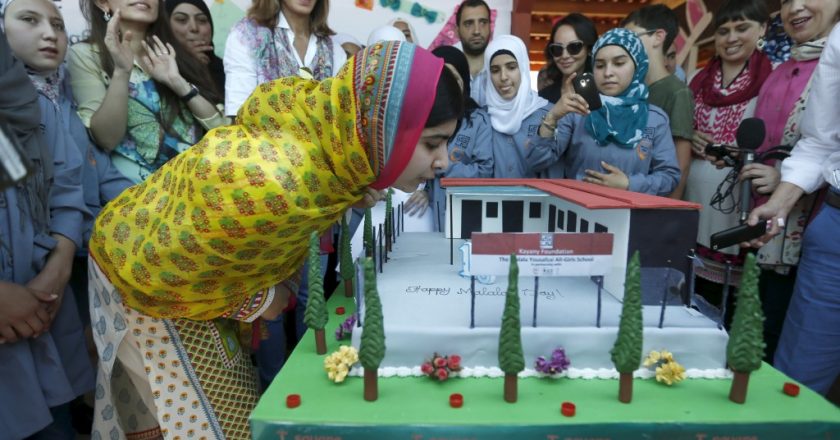
(BEIRUT, LEBANON) — Malala Yousafzai, the youngest winner of the Nobel Peace Prize, celebrated her 18th birthday in Lebanon on Sunday by opening a school for Syrian refugee girls and called on world leaders to invest in “books not bullets”.

Malala became a symbol of defiance after she was shot on a school bus in Pakistan 2012 by the Taliban for advocating girls’ rights to education. She continued campaigning and won the Nobel in 2014.

“I decided to be in Lebanon because I believe that the voices of the Syrian refugees need to be heard and they have been ignored for so long,” Malala told Reuters in a schoolroom decorated with drawings of butterflies.

The Malala Fund, a non-profit organization that supports local education projects, paid for the school in the Bekaa Valley, close to the Syrian border. It can welcome up to 200 girls aged 14 to 18.

“Today on my first day as an adult, on behalf of the world’s children, I demand of leaders we must invest in books instead of bullets,” Malala said in a speech.

Lebanon is home to 1.2 million of the 4 million refugees that have fled Syria’s war to neighboring countries. There are about 500,000 Syrian school-age children in Lebanon, but only a fifth are in formal education.

Malala Yousafzai, center, poses with girls for a picture at a school for Syrian refugee girls in Lebanon's Bekaa Valley on July 12. The Malala Fund, a non-profit organisation that supports local education projects, paid for the school in the Bekaa Valley, close to the Syrian border. (Jamal Saidi/Reuters)
Malala Yousafzai, center, poses with girls for a picture at a school for Syrian refugee girls in Lebanon’s Bekaa Valley on July 12. The Malala Fund, a non-profit organisation that supports local education projects, paid for the school in the Bekaa Valley, close to the Syrian border. (Jamal Saidi/Reuters)

Lebanon, which allows informal settlements on land rented by refugees, says it can no longer cope with the influx from Syria’s four-year conflict. One in four living in Lebanon is a refugee.

The U.N. says the number of Syrian refugees in neighboring countries is expected to reach 4.27 million by the end of the year.

“In Lebanon as well as in Jordan, an increasing number of refugees are being turned back at the border,” Malala said. “This is inhuman and this is shameful.”

Her father Ziauddin said he was proud she was carrying on her activism into adulthood.

“This is the mission we have taken for the last 8-9 years. A small moment for the education of girls in Swat Valley: it is spreading now all over the world,” he said.

Malala was feted with songs and a birthday cake. Moved to tears by the girls, she was modest when asked for advice.

“They are amazing, I don’t think they need any message, I don’t think they need any other advice because they know that education is very important for them.”

Reuters


U.S. congressional leaders invite colleagues to join Lebanon caucus

(WASHINGTON, DC) — A coalition of U.S. congressional leaders are calling on Lebanese-Americans to ask their representative to join the Congressional Caucus on U.S.-Lebanon Relations.

The bipartisan caucus is led by representatives Darrell Issa (R-CA) and Gwen Graham (D-FL), who recently distributed an appeal letter to their colleagues, urging them to join the caucus.

“A stable Middle East is in the best interests of our nation, and our relationship with Lebanon is one of the most important in the Middle East,” they wrote. “The caucus on U.S.-Lebanon relations will serve as an informal, bipartisan group of members dedicated to maintaining and strengthening the U.S.- Lebanese relationship.”

Issa, a Lebanese-American, has been actively involved in Lebanese-American affairs as a member of the board of directors for the American Task Force for Lebanon (ATFL), a nonprofit organization that promotes “a free and democratic Lebanon.”

“Lebanon has been a close friend to the United States, and shares our interest in peaceful and cooperative relations throughout the world,” Issa and Graham wrote.

“We should do all that we can to strengthen our bilateral relationship with Lebanon and help the people of Lebanon to realize a future of peace, prosperity, and opportunity.”

The caucus is working in cooperation with ATFL, which recently unveiled what they believe are Lebanon’s three main challenges.

According to their website, the organization hopes to lobby for “support for the Lebanese Armed Forces (LAF) and security services, broaden Lebanon’s capacity to cope with the enormous numbers of refugees from Syria, and protect vulnerable religious communities in the Middle East.”

The current list of caucus members include:

  • Darrell Issa (R-CA)
  • Gwen Graham (D-FL)
  • Charles Boustany (R-LA)
  • Betty McCollum (D-MN)
  • Richard Hanna (R-NY)
  • Debbie Dingell (D-MI)
  • Ralph Abraham (R-LA)
  • Marcy Kaptur (D-OH)
  • Trent Franks (R-AZ)
  • Steve Womack (R-AR)

UN agency cuts food vouchers for Syrian refugees in Lebanon

(BEIRUT, LEBANON) — The United Nations World Food Programme (WFP) is being forced to implement deeper cuts in food assistance for vulnerable Syrian refugees in Lebanon and Jordan because of a severe lack of funding.

“Just when we thought things couldn’t get worse, we are forced yet again to make yet more cuts,” said Muhannad Hadi, WFP Regional Director for the Middle East, North Africa, Central Asia and Eastern Europe. “Refugees were already struggling to cope with what little we could provide.”

In July, WFP will halve the value of food vouchers, or “e-cards,” in Lebanon, providing only $13.50 per person per month.

In Jordan, WFP fears that if it does not receive immediate funding by August, it will have to suspend all assistance to Syrian refugees living outside camps, leaving some 440,000 people with no food.

WFP is funded entirely by contributions from governments, companies and private individuals.

But its regional refugee operation is currently 81 percent underfunded and immediately requires $139 million to continue helping desperate refugees in Jordan, Lebanon, Egypt, Turkey and Iraq through September.

Since the beginning of the year, WFP officials said they made concerted efforts to prioritize available funds to ensure continued assistance to families most in need. But limited resources forced WFP to reduce the assistance to 1.6 million Syrian refugees in the five countries.

“We are extremely concerned about the impact these cuts will have on refugees and the countries that host them,” Hadi added. “Families are taking extreme measures to cope such as pulling their children out of school, skipping meals and getting into debt to survive. The long-term effects of this could be devastating.”

In 2014, WFP globally received $5.38 billion in contributions – 27 percent higher than in 2013. This was in response to an unprecedented number of emergencies in places such as Syria, Iraq, South Sudan, and the West African countries affected by Ebola.

WFP is the world’s largest humanitarian agency fighting hunger worldwide, delivering food assistance in emergencies and working with communities to improve nutrition and build resilience.

Each year, WFP assists some 80 million people in around 75 countries.

Angelina Jolie takes 9-year-old daughter to Lebanon to visit refugees

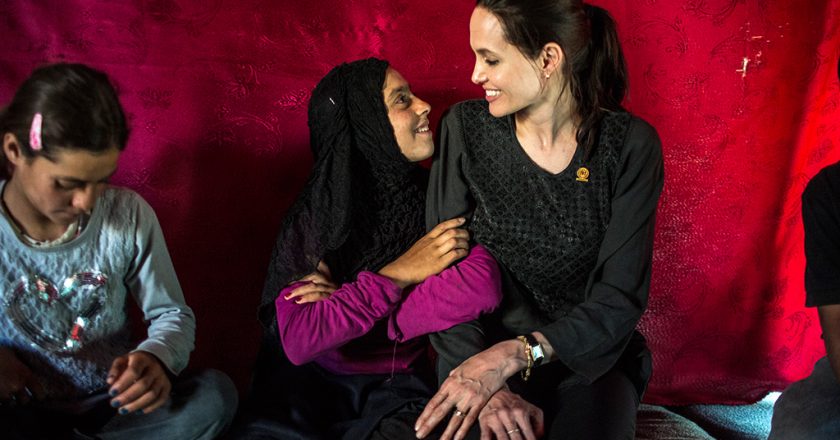
(BEIRUT, LEBANON) — Hollywood actress and human rights activist Angelina Jolie made an unannounced trip to Lebanon on Friday to introduce her 9-year-old daughter Shiloh to Syrian refugees in the Bekaa Valley.

People Magazine reports that the one-day trip was meant for her daughter to meet a 12-year-old Syrian girl named Hala, who Jolie met during her last trip to Lebanon in 2014.

“Shiloh is very aware that I hold refugee families in high regard and has been asking to come on missions and meet them for many years,” Jolie told People Magazine. “She had heard about Hala since my last visit to Lebanon, and has been wanting to meet her and her brothers and sisters.”

Hala has no parents and lives with her five brothers and sisters in a settlement near Zahle. Over 50 percent of the 1.2 million refugees in Lebanon are children, according to the UN.

Jolie's 9-year-old daughter Shiloh playing with a refugee child in Lebanon. (Photo via PEOPLE Magazine/Bryan Denton)
Jolie’s 9-year-old daughter Shiloh playing with a refugee child in Lebanon. (Photo via PEOPLE Magazine/Bryan Denton)

“It was wonderful that they were able to meet, play together, and make friends. So many refugees are children,” Jolie said. “I’ve often heard them say that the most painful thing is not that they have lost their homes – it is that they have lost their friends.”

Jolie said it was “humbling” to see Hala and her siblings again, and have the chance to introduce her daughter to a refugee family.

“Upon leaving the family, Shiloh asked many questions,” Jolie added. “It is of course hard to explain all of the harsh realities of war and displacement. She said she felt sad, but was happy that she went and is looking forward to the next visit.”

After leaving Lebanon, Jolie traveled to Turkey to attend an Iftar dinner in a Syrian refugee camp near the southern Turkish province of Mardin.

Jolie, 38, previously visited Lebanon in February 2014 to highlight the plight of Syrian children.

U.S. fundraiser aims to bring clean water to Lebanese schools

(DETROIT, MI) — A U.S.-based service organization is on a mission to raise $3 million to install water filtration systems in 1,200 Lebanese schools over the next three years.

A group of Rotary International leaders — in partnership with the Rotary of Lebanon and Troy Rotary Club in Troy, Mich.  — are part of an effort to bring clean water into Lebanon’s public school system.

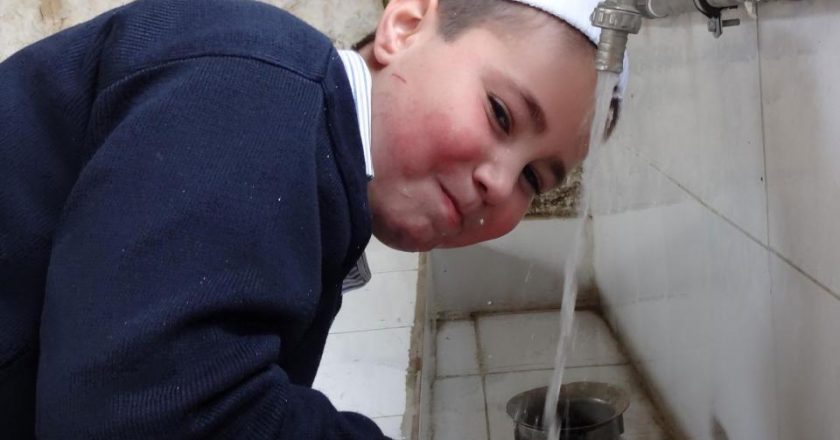
Nearly one in three Lebanese buy alternative sources of drinking water, usually from mobile water trucks or in bottles, according to the U.S. Agency for International Development (USAID).

Lebanese public schools are in even greater need, according to USAID, because of the influx of Syrian refugees, who have added 200,000 Syrian children into an already crowded system.

“The water reaching Lebanese private and public properties is so contaminated, it is undrinkable,” said Fadi Sankari, chairman of the Lebanon Water Project. “It is important to engage in Lebanon’s humanitarian affairs because as U.S born Americans we are fortunate enough to have clean drinking water at our disposal.”

Contaminated drinking water affects 300,000 Lebanese children and 200,000 Syrian children, according to Sankari. Rotary International has developed working committees to examine the hardest-hit schools, and allocate the resources and volunteers to launch the undertaking.

“I’m happy to report that we have roughly $1.2 million raised and nearly 400 schools complete and 50 in the works,” Sankari added.

The committee is working in cooperation with the Ministry of Education, UNICEF, and the Red Cross, among others. It costs $2,500 to install a water tank and filter in each school.

Lebanese Health Minister Wael Abu Faour announced in early April a new campaign to address water sanitation in Lebanese public schools. Abu Faour said his office identified high levels of bacteria in water samples from nearly all public school systems.

According to the Lebanese National News Agency, 49 percent of samples failed to meet the necessary health standards of the ministry.

Rotary International leaders in Lebanon have met with Abu Faour to discuss upcoming plans and timelines for project completion.

HOW YOU CAN HELP:

The Troy Rotary Club is hosting a fundraising gala on July 23 at Byblos Banquet Center in Dearborn, Mich. For more information call (248) 740-7151 — donations are tax deductible. The event flyer can be found at this link.

Salma Hayek meets with Syrian refugees in Lebanon

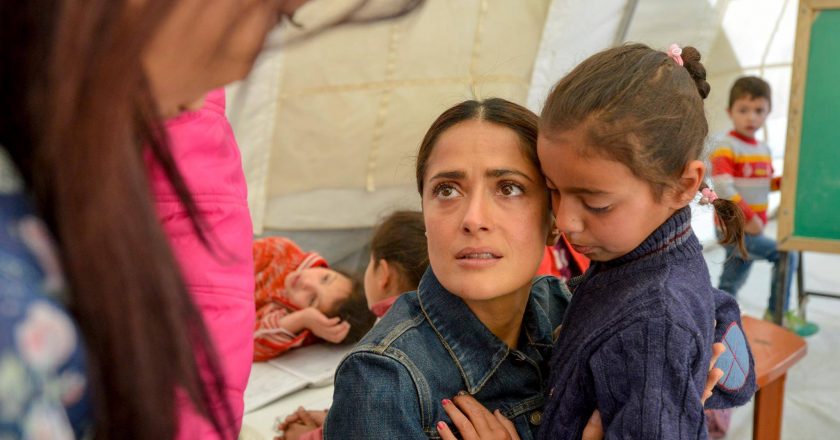
(BEIRUT, LEBANON) — Actress and film director Salma Hayek helped launch CHIME for the Children of Syria, a fundraising appeal to support children and families affected by the Syria crisis, following a recent visit to meet with Syrian refugees in Lebanon.

CHIME FOR CHANGE is a global campaign to raise funds and awareness for girls and women around the world focusing on the areas of education, health and justice.

Hayek visited Syrian refugees in Lebanon on April 25 to draw attention to the urgent humanitarian needs of children and families whose lives have been upended by the brutal conflict in Syria over the last four years.

Across the region, UNICEF estimates that 14 million children have been affected and are at risk of becoming a lost generation, including 2.6 million children who are no longer in school, and close to two million who are living as refugees in neighboring countries.

“Millions of children have been robbed of their childhood, their country and have lost their loved ones. As a result of the conflict in Syria, they are missing out on their education and are having to work to provide for their families,” said Hayek.

Hayek met with refugee children and observed a polio immunization campaign targeting high risk areas, in partnership with the Ministry of Public Health, UNICEF and local partner Beyond Association to protect nearly 190,000 children under the age of five from the crippling disease.

She also witnessed mobile medical clinics set up by UNICEF, the Ministry, and local partners to provide free primary healthcare, including access to vaccines, critically needed examinations, basic medicine and antenatal care to refugees in tented settlements across Lebanon.

“I’m deeply inspired by the courage of the Syrian refugee children and their families that I met in Lebanon who, against the odds, and despite the harm they have suffered or witnessed, are still determined to endure life and hope for a better future. I’m also moved by the generosity so many Lebanese people have shown toward those seeking refuge in their country,” said Hayek, whose paternal grandparents were Lebanese.

“I plead to everyone who is grateful for the peace and stability in their lives to show compassion for those who have lost it all and to help.”

Well-known for films such as Frida, Puss in Boots and most recently The Prophet, Hayek is also member of the CHIME FOR CHANGE Founding Committee supporting women and girls’ empowerment.

In 2008, Hayek travelled to Sierra Leone with UNICEF to witness firsthand the impact of maternal and neonatal tetanus on women and babies and observe UNICEF’s health and immunization programs.

The Gucci-UNICEF partnership was launched in 2005, and has benefitted more than 7.5 million children to date through UNICEF programs that focus on helping the most disadvantaged children have a brighter future through education.

SEE photos of Hayek’s visit:

11154717_747781448675852_5662259753049338274_o 11022535_747781445342519_4512202185618249690_o 11169592_747781442009186_5739864365310012097_o 11169783_747781432009187_5159765760151146813_o

UNHCR chief meets struggling Syrian refugees in Lebanon

(BEIRUT, LEBANON) — UN High Commissioner for Refugees António Guterres this week visited Syrian refugees living in harsh conditions in informal settlements in south Lebanon and called on the international community to do more to ease their plight.

Lebanon is host to nearly 1.2 million Syrian refugees, representing around a quarter of the country’s total population. The massive influx since the start of the Syria crisis in March 2011 has seen refugees settle in every corner of the country, putting a huge strain on stretched services and infrastructure.

“The equivalent of what we have in Lebanon in the United States would be more than 80 million refugees coming into the United States. You can understand that this has a terrible impact on the economy and society of Lebanon,” Guterres said on Tuesday in Debane, an informal settlement near the southern city of Ghaziye.

Almost a fifth of Syrian refugees in Lebanon live in informal settlements like Debane, where Guterres and Abdullah Al-Matouq, the UN’s secretary-general’s Humanitarian Envoy for Kuwait, met the residents and discussed the challenges they face.

Next to a dirt road in the shadow of the main coastal highway, the Debane settlement is a huddle of 23 makeshift shelters built from wooden planks and plastic sheeting and currently home to 30 Syrian families. Located on a strip of public land, the refugees are not allowed to make permanent constructions, with the result that living and sanitary conditions remain basic.

Mohammed, aged 44 years, and nine members of his family have lived there since 2012, when they fled the western Syrian city of Hama after their house was destroyed by bombing.

Asked by Guterres to describe the biggest difficulties facing them, Mohammed cited new government regulations requiring Syrians in Lebanon, including refugees registered with UNHCR, to pay a fee of US$200 each to renew their residency permits, which he said he and his family were unable to afford.

He also expressed his deep concern for his children’s education and the future of his unborn grandson. “These children, the new generation, there is no education here, the whole education system has changed for them, a whole generation is destroyed, what future is there for them?” he asked. “This little boy, who will be born in 10 to 15 days time, if we stay like this, he is going to be illiterate. This is an illiterate generation.”

Of the 400,000 school-age Syrian children in Lebanon, UNHCR and the UN Children’s Fund (UNICEF) are only able to provide funding for 106,000 places in the country’s state schools with the remaining three quarters receiving no formal education.

Afterwards Guterres said the visit had highlighted the dramatic needs not only of the Syrian refugees, but also the Lebanese government and communities hosting them, together with other host countries in the region.

He welcomed pledges totalling US$3.8 billion for the Syria crisis response in 2015 made by international donors at a conference in Kuwait last month, but stressed that even more would be needed due to the scale of the catastrophe.

“We cannot accept that the Syrian people will go on living in these absolutely tragic circumstances, and we cannot accept that countries like Lebanon and Jordan are facing such a dramatic challenge to their own economies and to their own stability,” he said.

Source: United Nations

Meet Carol Malouf: A Lebanese woman helping Syrian refugees

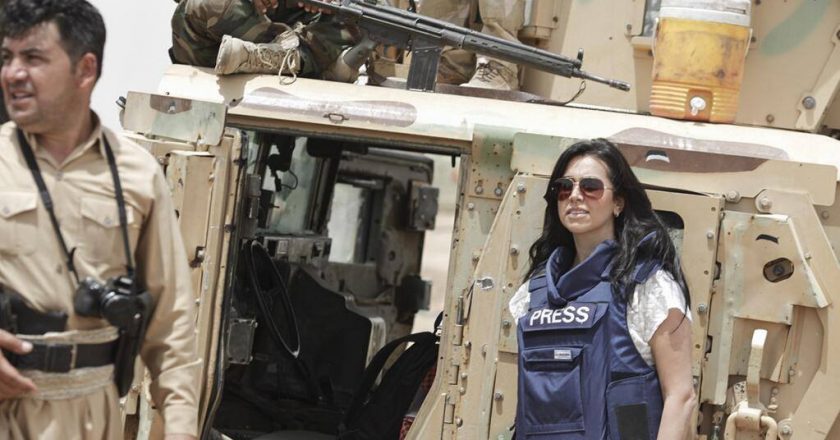
(BEIRUT, LEBANON) — Carol Malouf has many titles — journalist, political consultant, university lecturer, and media advisor. But in recent years, she’s added social activist to that list after launching a Lebanese NGO to help Syrian refugees.

“Lebanese for Refugees” was founded in December 2013 after Malouf was contacted by the municipality of Arsal to document the plight of over 400 Syrian refugee families, according to a report by Global Voices Online.

Malouf was inspired to raise money to provide blankets to Syrian refugees in Lebanon during cold winter months. But she realized it wasn’t enough.

The project quickly grew into large donation drives of clothes, shoes, toys, blankets, food and money, using more than two dozen trucks to distribute the aid to several refugee camps.

The NGO has raised more than $100,000 in just three months from December 2013 to March 2014, and $20,000 in January 2015 alone.

The donations come from independent donors and other NGOs and organizations, including the Islamic Relief Committee, the U.S. Embassy in Beirut, the European Union, and Foodblessed.

Despite Malouf’s attention to refugees, she hasn’t lost her roots in journalism. She writes regularly for the Daily Telegraph, Al Jazeera English, and Al Joumhouria, among others. She is also a frequent commentator and analyst for ABC News Australia and other Lebanese TV stations.

Malouf was also the founding member and Senior Middle East Producer at Al Jazeera English, where she extensively covered regional and international news and political stories.

She holds a masters degree in politics from the University of Exeter and a bachelors degree in international relations. She is fluent in Arabic, English and French.

If you wish to donate to “Lebanese for Refugees”, visit their Indiegogo campaign at this link.

WATCH Malouf talk about the refugee crisis in Lebanon on France 24:

Send this to friend